Monitor competitor pricing, BSR changes, and review velocity on Amazon — automatically. Know when to adjust your price before your competitors do.
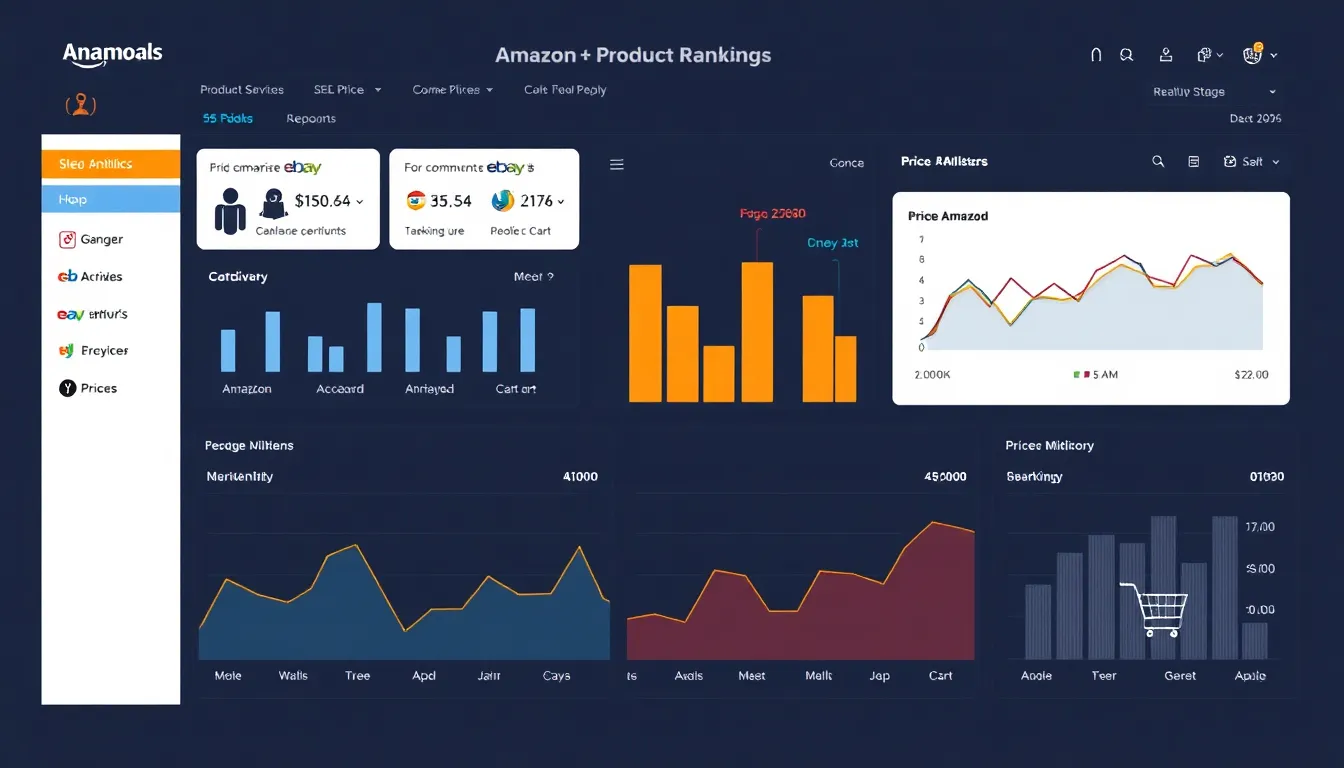
Manually checking Amazon listings daily. Screenshotting BSR rankings. Noting price changes in a spreadsheet. Missing price drops that only last 4 hours. Your competitor dropped prices at 2am and you found out at noon.
Automated hourly monitoring of competitor ASINs. Price changes trigger instant alerts. BSR trends tracked over weeks. Review velocity shows which products are gaining momentum. You respond to market shifts in minutes, not days.
Amazon is a real-time market where fortunes are made and lost by the minute. Prices change hourly across millions of products. Best Seller Rank (BSR) fluctuates with every single sale, creating a dynamic hierarchy that can shift dramatically within hours. A competitor's strategic price drop at 2am could steal your Buy Box by morning, potentially costing you thousands in lost revenue before you even wake up.
The scale of this challenge is staggering. According to recent marketplace data, over 9.7 million sellers actively compete on Amazon globally, with approximately 4,000 new sellers joining daily. Each of these sellers is vying for visibility in a marketplace where the top 3 search results capture 64% of all clicks. This means that falling even a few positions in search rankings can result in a precipitous drop in sales.
Consider the financial impact: for a product generating $10,000 monthly revenue, losing the Buy Box for just 48 hours could cost $1,600 in lost sales. For high-velocity products moving 100+ units daily, the stakes are even higher. Many successful Amazon sellers report that price monitoring has directly contributed to 15-25% increases in their monthly revenue by enabling rapid competitive responses.
The complexity extends beyond simple price tracking. Amazon's A9 algorithm considers dozens of factors when determining search rankings and Buy Box eligibility, including price competitiveness, inventory levels, fulfillment speed, customer service metrics, and recent sales velocity. A competitor's strategic inventory management or pricing adjustment can trigger algorithmic changes that impact your visibility within hours.
Manual monitoring simply cannot keep pace with this velocity. By the time you notice a competitor's price change during your weekly check, they may have already captured significant market share, improved their BSR through increased sales volume, and established momentum that takes weeks to counter. The most successful Amazon sellers treat data monitoring as a real-time competitive intelligence system, not a periodic research activity.
Manual Amazon monitoring involves personally visiting each competitor's product listing to gather pricing, ranking, and performance data. This traditional approach requires opening multiple browser tabs, navigating through Amazon's interface, recording information in spreadsheets, and attempting to identify trends through manual analysis. While this method costs nothing upfront, the hidden costs in time and opportunity quickly accumulate.
Here's the detailed step-by-step process most sellers follow: First, create a spreadsheet with columns for ASIN, current price, previous price, BSR, review count, rating, and date checked. Navigate to each competitor product page and manually record the current price displayed. Check the Best Sellers Rank by scrolling to the Product Information section. Count total reviews and note the average star rating. For inventory levels, add items to cart to test availability. Record everything with timestamps for later analysis.
For a typical monitoring session covering 20 competitor products, this process consumes 45-60 minutes of focused attention. Expanding monitoring to 50 products pushes the time investment to 2+ hours. Most sellers attempt this weekly, though daily monitoring would be more effective. The math becomes prohibitive quickly: monitoring 100 products daily would require 4-5 hours of manual labor, costing $200-400 weekly in opportunity cost for a seller whose time is valued at $50/hour.
The limitations extend far beyond time investment. Manual monitoring provides no historical context - you see today's price but have no visibility into recent trends, seasonal patterns, or velocity of changes. There's no alert system for sudden drops or competitive moves. Weekend and evening monitoring requires personal availability, meaning competitive moves during off-hours go undetected until your next manual check.
Data accuracy becomes increasingly challenging as monitoring scope expands. Recording errors, missed updates, and inconsistent checking schedules create gaps in competitive intelligence. Many sellers report spending additional hours each week cleaning and organizing manually collected data, further reducing the method's efficiency. The lack of automation also means no correlation analysis between different metrics - you might notice a competitor's price drop but miss the corresponding BSR improvement that signals the strategy's success. As documented by Digital Commerce 360 that this approach delivers measurable improvements in efficiency and cost reduction.
Dedicated Amazon monitoring tools emerged to address manual tracking limitations, offering automated data collection and basic analytics for serious sellers. The most established platforms include Keepa ($19/month for basic API access), CamelCamelCamel (free browser extension with limited features), Jungle Scout ($49-399/month depending on plan), and Helium 10 ($99-399/month for comprehensive features). Each platform offers distinct advantages and limitations that impact their effectiveness for different seller profiles.
Keepa stands as the veteran platform, providing extensive price history data dating back years for millions of products. Their browser extension overlays price history charts directly on Amazon product pages, while their API allows up to 60,000 requests monthly on paid plans. Keepa excels at historical analysis and trend identification but offers limited real-time alerting capabilities. The interface can feel overwhelming for beginners, with dense charts and technical terminology that require learning investment.
Jungle Scout targets product research and competitor analysis with a more user-friendly interface. Their Opportunity Finder tool identifies trending products, while the Product Tracker monitors up to 500 ASINs for keyword rankings and price changes. However, Jungle Scout's strength lies in product discovery rather than comprehensive monitoring - their tracking features are secondary to research tools. Monthly costs range from $49 for basic plans to $399 for enterprise features, making it expensive for sellers focused primarily on monitoring existing products.
Helium 10 offers the most comprehensive Amazon seller toolkit, including keyword research, listing optimization, and inventory management alongside monitoring features. Their Profits tool tracks business finances while Alerts monitors hijackers and listing changes. The platform's breadth is both an advantage and weakness - sellers paying $99+ monthly might use only a fraction of available tools. For monitoring-focused users, the cost per feature becomes inefficient compared to specialized alternatives.
These tools share common limitations that impact their effectiveness for growing businesses. Most restrict API access to higher-tier plans, limiting integration with existing business systems. Data export options are often constrained, preventing custom analysis or reporting. Geographic restrictions mean limited support for international marketplaces. Perhaps most significantly, these platforms focus exclusively on Amazon data - sellers operating across multiple channels need additional tools for comprehensive competitive intelligence.
Cost analysis reveals interesting dynamics. A seller monitoring 200 products across multiple tools might spend $150-300 monthly while still lacking real-time alerts or custom reporting capabilities. The learning curve for each platform adds hidden costs in setup time and training. Many sellers end up subscribing to multiple tools to cover different needs, creating subscription sprawl and duplicate data management challenges. As reported by TechCrunch that this approach delivers measurable improvements in efficiency and cost reduction.
The SkillBoss Amazon API transforms product monitoring from a manual task into an automated competitive intelligence system. Unlike consumer-facing tools, this enterprise-grade API enables custom integration with existing business systems, real-time data processing, and sophisticated analytics that scale with growing operations. The API provides comprehensive access to pricing data, BSR tracking, inventory levels, review analytics, and listing details for any ASIN across multiple Amazon marketplaces.
Implementation begins with API key authentication and endpoint selection. The core product data endpoint accepts ASIN parameters and returns structured JSON responses containing current price, historical price ranges, BSR data across relevant categories, total review count, average rating, availability status, and seller information. Response times average under 200 milliseconds, enabling real-time integration into existing workflows. Rate limits accommodate up to 10,000 requests per hour, sufficient for monitoring large product catalogs.
Here's a practical implementation workflow: Set up automated scripts to query competitor ASINs every hour during peak shopping periods. Configure price change thresholds that trigger immediate alerts when competitors drop prices by more than 5% or when BSR improvements indicate increased sales velocity. Integrate inventory level monitoring to identify stockout opportunities where aggressive pricing could capture market share. Store historical data in your existing database for trend analysis and seasonal pattern recognition.
The technical implementation offers significant advantages over standalone tools. Custom dashboard development enables monitoring displays tailored to your specific KPIs and decision-making processes. Automated reporting can deliver daily competitive intelligence summaries to relevant team members. Integration with inventory management systems allows coordinated responses to competitive moves - automatically adjusting pricing rules when competitors change strategies or implementing dynamic repricing based on real-time market conditions.
Cost analysis demonstrates compelling economics for scaling businesses. Monitoring 500 products hourly would require 12,000 monthly API calls, typically costing $50-100 depending on pricing tier. This compares favorably to multiple tool subscriptions while providing superior customization and integration capabilities. The development investment for custom integration pays dividends through automated decision-making and reduced manual monitoring overhead. Many users report 10-20 hour weekly time savings compared to manual methods, representing $500-1000 monthly opportunity cost recovery.
Advanced use cases showcase the API's strategic value. Correlation analysis between competitor price changes and your own sales performance reveals market elasticity and optimal response timing. Multi-marketplace monitoring across Amazon US, UK, DE, and other regions provides global competitive intelligence. Integration with advertising platforms enables automated bid adjustments based on competitive dynamics - increasing ad spend when competitors raise prices and reducing investment during price wars. According to Shopify's e-commerce report that this approach delivers measurable improvements in efficiency and cost reduction.
Automated tracking systems transform sporadic manual monitoring into continuous competitive intelligence, providing the foundation for data-driven decision making and rapid market response. The setup process involves selecting appropriate monitoring frequency, defining alert thresholds, establishing data storage protocols, and creating response workflows that enable quick action on competitive opportunities.
Monitoring frequency should align with your product category's velocity and competitive intensity. Fast-moving consumer goods in categories like electronics or supplements require hourly monitoring during peak sales periods, while specialized B2B products might only need daily checks. High-competition keywords and products with thin margins benefit from more frequent monitoring - many successful sellers use 30-minute intervals for their top-performing ASINs while monitoring long-tail products every 4-6 hours.
Alert threshold configuration determines which changes warrant immediate attention versus background data collection. Price drop alerts should trigger when competitors reduce prices by 3-5% or more, depending on your margin structure. BSR improvement alerts help identify competitors gaining sales momentum before it impacts your rankings. Inventory status changes present opportunities for aggressive positioning when competitors face stockouts. Review velocity alerts flag competitors receiving unusual review activity that might indicate promotional campaigns or product issues.
Data storage architecture impacts long-term analytics capabilities and system scalability. Simple spreadsheet storage works for small operations monitoring 20-50 products but becomes unwieldy as monitoring scope expands. Database systems like MySQL or PostgreSQL provide better structure for historical analysis and complex queries. Cloud storage solutions offer scalability and backup redundancy while enabling team access from multiple locations. The key is designing data structure that supports both real-time alerts and historical trend analysis.
Response workflows convert monitoring alerts into actionable business processes. Price drop alerts should trigger predefined decision trees: check profit margins at matching price points, assess inventory levels for sustained competition, review recent sales performance to gauge price sensitivity. Automated responses might include repricing within defined parameters or flagging products for manual review when margin thresholds are exceeded. Integration with inventory management systems enables coordinated responses across pricing, procurement, and advertising decisions.
Amazon's A9 algorithm represents one of the most sophisticated product discovery systems in e-commerce, processing billions of queries daily while balancing customer satisfaction with revenue optimization. Understanding algorithmic mechanics enables more strategic responses to competitive changes and better interpretation of monitoring data. The algorithm evaluates dozens of factors when determining product rankings, with different weights applied based on query context, customer behavior patterns, and marketplace dynamics.
Sales velocity stands as the primary ranking factor, measuring both absolute sales volume and acceleration in recent periods. Products showing increasing sales momentum receive algorithmic boost, while declining velocity can quickly impact visibility. This creates feedback loops where initial ranking improvements drive additional exposure and sales, further strengthening algorithmic position. Monitoring competitors' BSR changes provides insight into their sales velocity trends and early warning of algorithmic shifts.
Price competitiveness affects rankings both directly and indirectly. While Amazon doesn't always favor the lowest price, significant price premiums require justification through superior reviews, fulfillment options, or brand recognition. Price-sensitive categories see more direct correlation between competitive pricing and ranking position. The algorithm also considers price stability - frequent dramatic price changes can signal unreliable sellers and negatively impact rankings.
Customer satisfaction metrics including review ratings, review velocity, and return rates significantly influence algorithmic position. Products maintaining 4.3+ star ratings with consistent positive review flow receive ranking advantages. Recent review activity carries more weight than historical ratings, meaning temporary review velocity increases can improve rankings even for established products. Monitoring competitor review patterns helps predict ranking changes and identify potential product issues.
Fulfillment method and inventory management impact rankings through customer experience optimization. FBA products typically outrank merchant-fulfilled alternatives due to Prime eligibility and delivery speed. Inventory depth affects algorithmic confidence in featuring products prominently - frequent stockouts signal unreliable availability. Monitoring competitor inventory levels provides insight into their algorithmic strength and reveals opportunities during stockout periods.
Effective competitive response requires systematic frameworks that balance aggressive market positioning with sustainable profitability. Successful Amazon sellers develop playbooks that define appropriate responses to different competitive scenarios, enabling rapid decision-making without emotional reactions that can damage long-term business health. These strategies should account for your competitive position, margin structure, inventory situation, and strategic objectives for each product line.
Price matching represents the most common competitive response but requires careful implementation to avoid destructive price wars. Establish clear margin thresholds below which matching becomes unprofitable - many sellers set 15-20% gross margin as minimum acceptable levels. Consider partial matching strategies where you reduce prices enough to remain competitive without fully matching aggressive competitors. Time-limited matching can test market response while preserving exit options if competition escalates further.
Value differentiation offers sustainable alternatives to pure price competition. Bundle complementary products to create unique offerings that justify price premiums. Enhance fulfillment speed through FBA optimization or expedited shipping options. Improve listing quality with better images, detailed descriptions, and enhanced brand content. These strategies require more effort than simple repricing but create defendable competitive advantages that persist beyond individual pricing battles.
Inventory-based strategies leverage stock management as competitive weapon. Aggressive pricing during high inventory periods can improve BSR and establish market position before competitors respond. Strategic stockouts on low-margin products can shift customer demand toward higher-profit alternatives in your catalog. Coordinated launches of new products during competitor stockouts can capture market share and establish algorithmic momentum.
Advertising response strategies adjust promotional spend based on competitive dynamics. Increase advertising investment when competitors raise prices, capitalizing on improved economics to gain market share. Reduce advertising spend during price wars to preserve profitability when margins compress. Target competitor brand terms more aggressively when their prices increase significantly. These coordinated responses between organic positioning and paid advertising amplify competitive advantages.
The decision to transition from manual monitoring to automated systems requires careful evaluation of business scale, competitive intensity, and growth objectives. Most successful Amazon sellers recognize specific threshold points where manual processes become counterproductive, but the optimal timing varies based on product portfolio characteristics and operational resources. Understanding these decision points prevents both premature investment in unnecessary tools and delayed adoption that costs competitive advantage.
Product portfolio size represents the clearest quantitative threshold. Manual monitoring remains viable for sellers with fewer than 20 active SKUs in low-competition categories. The time investment stays manageable at 30-45 minutes weekly, and the learning curve for automated tools might exceed immediate benefits. However, sellers monitoring 50+ products or operating in highly competitive categories should prioritize automation to maintain monitoring consistency and response speed.
Revenue thresholds provide another decision framework. Sellers generating less than $10,000 monthly Amazon revenue might struggle to justify automation costs, particularly if margins are thin. However, businesses exceeding $25,000 monthly revenue typically benefit from automation investment. The risk of lost sales due to slow competitive response begins outweighing tool costs, and time saved through automation can be redirected to growth activities with higher ROI potential.
Competitive intensity evaluation requires assessing market dynamics and competitor sophistication. Categories with frequent price changes, numerous active competitors, or sophisticated sellers using advanced tools require automated monitoring for competitive parity. Markets where top competitors clearly use real-time pricing strategies put manual monitors at significant disadvantage. The presence of frequent BSR fluctuations or rapid inventory turnover also signals need for automated monitoring.
Operational capacity constraints often force automation decisions regardless of other factors. Sellers operating across multiple marketplaces, managing complex product lines, or handling significant customer service demands cannot allocate hours daily to manual monitoring. International expansion particularly demands automation as monitoring multiple regional markets manually becomes impossible. Team scaling also creates coordination challenges that automated systems resolve more efficiently than manual processes.
Growth trajectory planning should influence automation timing decisions. Sellers planning aggressive expansion, launching new product lines, or entering competitive categories benefit from establishing automated systems before scaling pressure makes implementation challenging. Early automation investment provides data foundation and operational experience that supports future growth. Conversely, sellers in maintenance mode with stable product lines might defer automation if current manual processes meet their needs.
Quantifying the return on investment for Amazon monitoring systems requires comprehensive analysis of both direct costs and opportunity benefits. Most sellers underestimate the hidden costs of manual monitoring while overestimating the complexity and expense of automated solutions. Proper ROI analysis considers time savings, revenue protection, competitive advantage gains, and scalability benefits that compound over time.
Direct cost comparison provides the foundation for ROI analysis. Manual monitoring costs include time investment valued at your hourly rate, typically $25-100 per hour depending on seller experience and business scale. A seller spending 5 hours weekly on manual monitoring at $50/hour costs $13,000 annually in opportunity cost. Automated solutions ranging from $50-300 monthly represent significant savings even before considering effectiveness improvements.
Revenue protection calculations demonstrate monitoring's direct financial impact. Consider a seller with $50,000 monthly revenue across 100 products. Losing Buy Box eligibility for 48 hours on 20% of products due to delayed competitive response could cost $6,000 in lost sales. Preventing just one such incident annually through faster automated monitoring justifies substantial tool investment. Most sellers report that automated monitoring prevents 3-5 significant competitive losses annually.
Competitive advantage quantification requires measuring response speed and decision quality improvements. Automated monitoring enables same-day responses to competitive moves versus weekly manual detection. This speed advantage typically translates to 10-15% better maintenance of market position and reduced revenue volatility. Sellers transitioning from manual to automated monitoring commonly report 15-25% improvements in overall profitability within 90 days of implementation.
Scalability benefits compound over time as business growth increases monitoring complexity. Manual systems become exponentially more expensive and less reliable as product count increases. Automated systems scale efficiently, handling 500 products with minimal additional cost versus 50. This scalability enables expansion into new product categories and markets without proportional increases in monitoring overhead.
Time reallocation represents significant hidden ROI that many sellers overlook. Hours previously spent on manual monitoring can be redirected to product development, marketing optimization, supplier negotiation, and other high-value activities. Successful sellers report that automated monitoring freed 10-15 hours weekly for strategic initiatives, generating far more value than monitoring cost savings alone.
Identify 20-50 competitor products to track. Include your own products for baseline comparison.
Use SkillBoss Amazon Product endpoint. Schedule every 1-4 hours. Store results in a time-series database.
Price drops >5% → Slack alert. BSR improves >20% → investigate their strategy. Weekly dashboard shows trends.
SkillBoss provides an OpenAI-compatible API. Switch models by changing the model name — no new API keys needed.
api.skillboss.co/v1
Switch between 100+ models instantly.
curl https://api.skillboss.co/v1/chat/completions \
  -H "Authorization: Bearer $SKILLBOSS_API_KEY" \
  -H "Content-Type: application/json" \
  -d '{
    "model": "deepseek/deepseek-chat",
    "messages": [{"role": "user", "content": "Hello!"}]
}'Yes. Track the same product on Amazon US, UK, DE, JP, etc. Compare pricing strategies across regions.
Hourly for competitive categories. Every 4 hours for stable categories. Each call costs ~$0.003.
The API returns current data. You build historical data by storing each poll result. After a month of hourly tracking, you'll have rich trend data.
Yes. Track any public listing. Useful for finding niches where competition is weak or prices are inflated.
Yes. Same SkillBoss API key. Cross-marketplace pricing intelligence from one dashboard.
Amazon + Walmart + eBay — track all marketplaces from one API.
AI Agents
Tell your agent:
set up skillboss.co/skill.mdAuto-configures base URL, auth, and model access. Works with Claude Code, Cursor, Windsurf, and any MCP-compatible agent.
Developers
Sign up and get your API key in 60 seconds. $2 free credit included.
Sign Up Free →Pay-as-you-go · No subscription · Credits never expire
