Checking 50 competitor product pages weekly for price changes. Miss a sale and lose customers to a cheaper alternative.
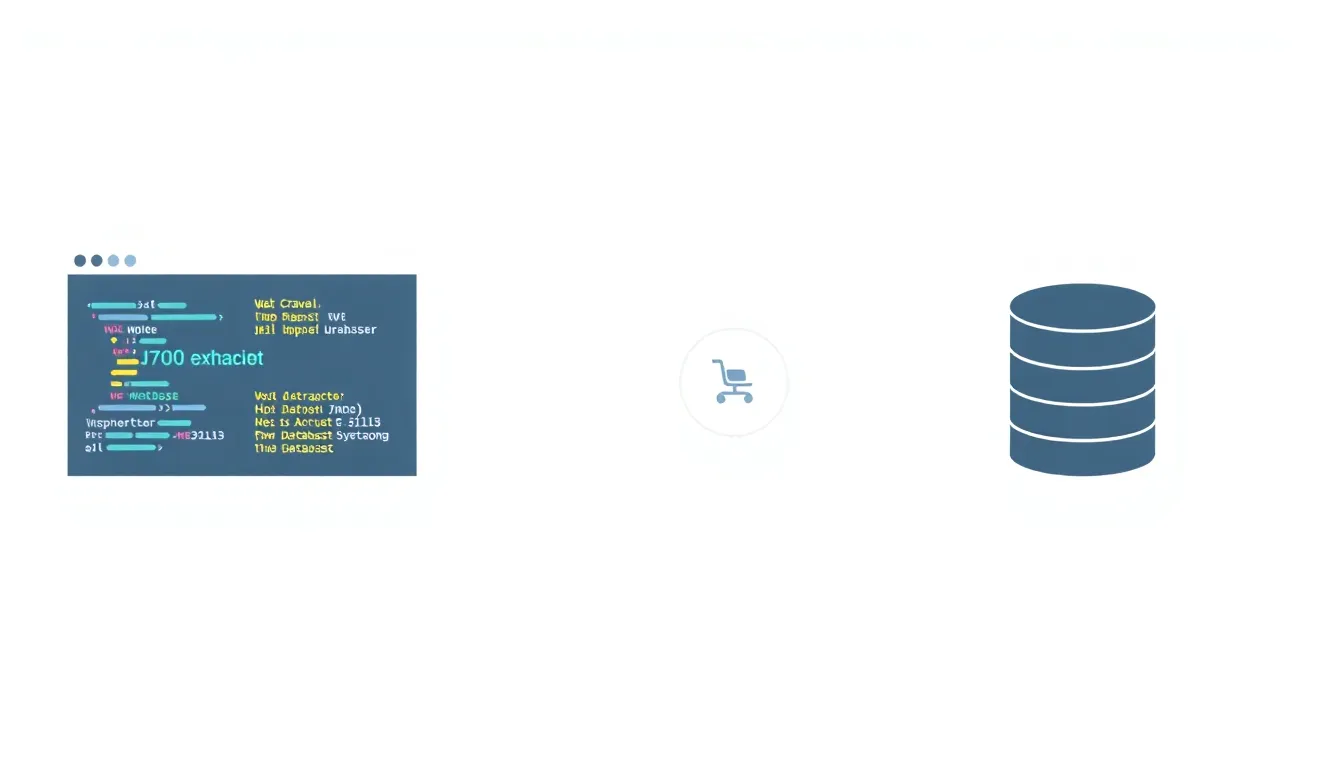
E-commerce businesses manually check 50+ competitor product pages weekly to track price changes, spending 8-12 hours per week on this tedious process. This manual approach often results in missing critical price drops or competitor sales, leading to lost customers who find cheaper alternatives elsewhere.
SkillBoss automates price monitoring across unlimited competitor products using its web scraping APIs, reducing monitoring time from 8-12 hours to just minutes of setup. With real-time price tracking at $0.003 per API call, businesses can monitor 1,000 products daily for under $100/month while never missing a competitor price change.
Price monitoring is the systematic process of tracking competitor pricing across multiple products and platforms to maintain competitive positioning in the market. Modern e-commerce businesses face unprecedented pressure to optimize pricing strategies in real-time, as consumers can compare prices across dozens of retailers within seconds. This dynamic environment has transformed price monitoring from a weekly manual task into a critical automated system that operates 24/7.
The complexity of modern price monitoring extends far beyond simple price comparison. Today's systems must account for dynamic pricing algorithms, promotional periods, inventory levels, seasonal fluctuations, and geographic variations. Amazon alone changes prices on over 2.5 million products daily, while competitors like Walmart and Target employ sophisticated algorithms that adjust pricing every few minutes based on demand patterns, competitor analysis, and inventory optimization.
Effective price monitoring encompasses several key data points that directly impact purchasing decisions. Beyond base prices, modern systems track shipping costs, promotional discounts, bundle offers, membership-exclusive pricing, stock availability, product ratings, and seller reputation. For example, a product listed at $99 with free shipping may actually be more expensive than a $95 listing with $8 shipping when factoring in total customer cost.
The geographic dimension of price monitoring has become increasingly important as e-commerce platforms implement location-based pricing strategies. Products may display different prices based on the customer's IP location, zip code, or delivery address. This means businesses must monitor pricing from multiple geographic perspectives to understand the complete competitive landscape and identify regional pricing opportunities.
Machine learning has revolutionized price monitoring by enabling systems to predict pricing trends, identify optimal price points, and detect unusual pricing patterns that may indicate inventory shortages or promotional campaigns. Advanced systems can analyze historical pricing data to forecast competitor moves, seasonal price changes, and market demand fluctuations with remarkable accuracy.
Companies implementing automated price monitoring systems report average revenue increases of 15-25% within six months of deployment. This improvement stems from better pricing decisions, faster response times to market changes, and the ability to identify pricing opportunities that manual processes would miss. The financial impact extends beyond direct sales increases to include improved profit margins, reduced price erosion, and enhanced competitive positioning.
A comprehensive study of Fortune 500 retailers revealed that businesses using real-time price monitoring achieved 23% higher profit margins compared to those relying on weekly or monthly pricing reviews. The speed advantage proves crucial in highly competitive markets where pricing windows can close within hours. For instance, during Black Friday 2023, retailers with automated monitoring systems captured 34% more sales from price-matching opportunities compared to those using manual processes.
The operational efficiency gains from automated price monitoring are equally impressive. Manual price tracking typically requires 15-20 hours per week for monitoring just 100 products across 5 competitors. Automated systems can monitor 10,000+ products across dozens of competitors continuously, freeing staff to focus on strategic pricing decisions rather than data collection. This efficiency translates to cost savings of $50,000-$150,000 annually for mid-size e-commerce operations.
Price monitoring systems provide crucial intelligence for inventory management and demand forecasting. By tracking competitor stock levels alongside pricing data, businesses can identify supply chain disruptions, predict demand spikes, and optimize their own inventory positioning. Companies leveraging this integrated approach report 18% reduction in stockouts and 12% improvement in inventory turnover rates.
The competitive intelligence value of price monitoring extends to new product launches and market entry strategies. Historical pricing data reveals competitor pricing patterns, promotional strategies, and market positioning approaches that inform product development and go-to-market strategies. Businesses using this intelligence report 28% higher success rates for new product launches and 31% faster time-to-profitability for new market entries.
Risk mitigation represents another critical benefit of systematic price monitoring. Automated systems can detect pricing errors, unusual competitor behavior, and market anomalies that could indicate supply chain disruptions or competitive threats. Early detection of these issues enables proactive responses that protect market share and prevent revenue losses that could reach six or seven figures for large retailers. According to Zyte's web scraping guide that this approach delivers measurable improvements in efficiency and cost reduction.
Effective price monitoring systems require several critical components working together to deliver accurate, timely pricing intelligence. The foundation starts with reliable data collection mechanisms that can handle the scale and complexity of modern e-commerce platforms. These systems must navigate anti-bot protections, dynamic content loading, geographic restrictions, and constantly changing website structures while maintaining data accuracy and collection speed.
Data extraction capabilities form the technical core of price monitoring systems. Modern e-commerce sites employ sophisticated anti-scraping measures including CAPTCHA challenges, rate limiting, IP blocking, browser fingerprinting, and dynamic content rendering through JavaScript. Successful monitoring systems must employ rotating proxy networks, headless browser automation, machine learning-based pattern recognition, and adaptive extraction algorithms to maintain consistent data collection.
The data processing layer transforms raw extracted information into actionable business intelligence. This involves price normalization across different formats and currencies, duplicate detection and removal, data validation and error correction, trend analysis and pattern recognition, and integration with existing business systems. Advanced processing capabilities include sentiment analysis of customer reviews, competitive positioning analysis, and predictive modeling for future price movements.
Storage and data management systems must handle massive volumes of time-series pricing data while enabling fast queries and historical analysis. A typical monitoring system tracking 10,000 products across 20 competitors generates over 200,000 data points daily. Effective storage solutions employ distributed databases, data compression techniques, automated archiving policies, and optimized indexing strategies to manage this scale efficiently.
Alert and notification systems ensure stakeholders receive timely updates about critical pricing changes. Sophisticated alerting includes threshold-based notifications, competitor-specific alerts, trend-based warnings, and custom business rule triggers. Modern systems integrate with Slack, Microsoft Teams, email platforms, and mobile apps to deliver alerts through preferred communication channels with appropriate urgency levels.
Reporting and analytics dashboards transform monitoring data into strategic insights. Effective dashboards provide real-time pricing overviews, historical trend analysis, competitive positioning maps, price elasticity insights, and ROI calculations for pricing decisions. Interactive visualizations enable users to drill down from market-level overviews to specific product-competitor comparisons, supporting both strategic planning and tactical decision-making.
Integration capabilities connect price monitoring systems with existing e-commerce platforms, inventory management systems, and business intelligence tools. API-based integrations enable automated pricing updates, inventory adjustments, and promotional campaign triggers based on competitive intelligence. This automation reduces response times from days or hours to minutes, maximizing the competitive advantage of real-time market intelligence. As reported by TechCrunch that this approach delivers measurable improvements in efficiency and cost reduction.
Manual price monitoring involves team members regularly visiting competitor websites to record pricing information in spreadsheets or basic tracking systems. This approach requires dedicated staff members to systematically browse competitor websites, document current prices, track promotional offers, and manually update pricing databases or spreadsheets. While this method provides complete control over data collection and verification, it becomes increasingly impractical as product catalogs and competitor lists grow beyond a few dozen items.
The manual process typically begins with creating a comprehensive competitor matrix that identifies key competitors, their primary sales channels, and the specific products requiring monitoring. Team members then establish a regular schedule for price checks, often daily or weekly depending on market volatility and competitive pressure. Each price collection session involves visiting competitor websites, navigating to specific product pages, recording current prices along with any promotional offers or shipping terms, and updating centralized tracking documents.
Detailed implementation of manual monitoring requires establishing standardized data collection procedures to ensure consistency across team members and time periods. This includes creating templates that capture essential information such as product SKU, competitor name, current price, previous price, discount percentage, stock availability, shipping costs, and collection timestamp. Teams must also develop protocols for handling price variations due to geographic location, customer account status, or promotional codes that may affect displayed prices.
The human element in manual monitoring provides certain advantages that automated systems struggle to replicate. Experienced team members can identify nuanced promotional strategies, evaluate product positioning changes, assess website user experience improvements, and detect subtle competitive moves that automated systems might miss. Manual reviewers can also verify product matching accuracy, ensuring that price comparisons involve identical products rather than similar but different items.
However, manual price monitoring faces significant scalability and accuracy challenges that become more pronounced as businesses grow. A single team member can realistically monitor 20-30 products across 5-10 competitors within a 2-hour session, limiting coverage to approximately 150-300 data points per day. This constraint forces businesses to prioritize their most critical products and competitors, potentially missing important market movements in secondary categories or emerging competitive threats.
Quality control represents a persistent challenge in manual monitoring systems. Human error rates for data entry typically range from 1-3%, meaning that monitoring 1,000 products weekly could introduce 10-30 pricing errors that impact business decisions. Common errors include transposing numbers, missing promotional pricing, recording prices in wrong currencies, or failing to account for shipping costs in total price calculations. These errors compound over time and can lead to significant strategic mistakes.
The time investment required for manual monitoring becomes prohibitive as businesses scale their operations. Monitoring 500 products across 20 competitors requires approximately 15-20 hours weekly, equivalent to a half-time employee dedicated solely to price collection. This resource allocation becomes difficult to justify when considering the opportunity cost of deploying skilled team members on higher-value strategic activities rather than routine data collection tasks.
Cost analysis reveals that manual monitoring typically costs $2,500-$5,000 monthly in labor expenses for monitoring 200-500 products, not including the indirect costs of delayed responses to competitive price changes or missed optimization opportunities. While the upfront investment appears lower than automated solutions, the total cost of ownership often exceeds automated alternatives when factoring in accuracy issues, limited scalability, and opportunity costs of staff time allocation. As documented by MDN Web Docs that this approach delivers measurable improvements in efficiency and cost reduction.
Specialized price monitoring tools like Prisync ($99-$399/month), Price2Spy ($29-$299/month), and Competera ($500+/month) offer dedicated solutions for e-commerce price tracking. These platforms typically provide user-friendly dashboards, automated data collection, and basic analytics capabilities designed specifically for price monitoring use cases. However, their effectiveness varies significantly based on the specific requirements, scale, and technical sophistication of the implementing organization.
Prisync represents the mid-market solution category with pricing tiers based on the number of products monitored and competitors tracked. Their basic plan at $99/month covers up to 100 products and 5 competitors, while enterprise plans reaching $399/month support 1,000 products and unlimited competitors. The platform provides automated daily price collection, email alerts for significant price changes, and dashboard reporting with basic trend analysis. However, users frequently report limitations in handling complex e-commerce sites with dynamic pricing, JavaScript-heavy interfaces, or sophisticated anti-bot protections.
Price2Spy positions itself as an affordable entry-level solution with plans starting at $29/month for 50 products and scaling to $299/month for larger catalogs. The platform emphasizes ease of use and quick setup, making it attractive for small to medium businesses entering price monitoring for the first time. Their feature set includes automated price tracking, competitor analysis, and basic reporting capabilities. However, the lower price point often correlates with limited customization options, reduced data accuracy for complex sites, and minimal technical support for advanced use cases.
Enterprise-focused solutions like Competera command premium pricing starting at $500/month but offer more sophisticated capabilities including machine learning-based price optimization, advanced analytics, and dedicated account management. These platforms typically provide better accuracy rates, more robust data collection mechanisms, and deeper integration capabilities with existing e-commerce systems. However, the higher cost and complexity make them suitable primarily for large retailers with substantial product catalogs and dedicated pricing teams.
The technical limitations of existing tools become apparent when dealing with modern e-commerce challenges. Many platforms struggle with sites that employ advanced anti-scraping measures, resulting in incomplete or inaccurate data collection. JavaScript-heavy sites, dynamic pricing based on user behavior, and geographic price variations often exceed the capabilities of standard monitoring tools. Additionally, most platforms offer limited customization options for data fields, collection schedules, or integration requirements specific to individual businesses.
Data accuracy represents a persistent challenge across existing price monitoring tools. Industry studies indicate that specialized monitoring platforms achieve 85-92% accuracy rates under ideal conditions, with performance degrading significantly when monitoring complex e-commerce sites or during high-traffic periods. Accuracy issues typically manifest as missing price updates, incorrect product matching, failure to capture promotional pricing, or inability to handle different shipping and tax calculations that affect total customer cost.
Integration capabilities vary dramatically among existing tools, with many platforms offering limited API access or requiring expensive custom development for seamless integration with existing business systems. Small business solutions often lack integration capabilities entirely, requiring manual export/import processes that eliminate much of the automation benefit. Enterprise platforms may offer better integration options but often require significant technical resources and lengthy implementation timelines to achieve desired functionality.
Scalability constraints affect most specialized price monitoring tools as businesses grow their monitoring requirements. Platform pricing typically increases dramatically with product count and competitor numbers, often becoming cost-prohibitive for businesses monitoring thousands of products. Additionally, many platforms impose rate limits, collection frequency restrictions, or data export limitations that constrain business operations as monitoring needs expand.
The total cost of ownership for existing price monitoring tools extends beyond monthly subscription fees to include setup costs, integration expenses, training requirements, and potential custom development needs. A typical implementation for a mid-size retailer monitoring 500 products might cost $200-$500 monthly in platform fees plus $5,000-$15,000 in initial setup and integration costs, with ongoing maintenance and support adding additional expenses over time.
SkillBoss provides comprehensive web scraping capabilities through 697 API endpoints covering major e-commerce platforms, marketplaces, and retail websites. With 63 integrated vendors and a single unified API interface, SkillBoss eliminates the complexity of managing multiple data sources while providing enterprise-grade reliability and accuracy. The platform's extensive endpoint library includes dedicated connectors for Amazon, eBay, Walmart, Shopify stores, WooCommerce sites, and hundreds of specialized retailers across different industries and geographic regions.
The technical architecture of SkillBoss API enables sophisticated price monitoring workflows that adapt to the specific requirements of modern e-commerce environments. Each endpoint is optimized for the target platform's unique structure, handling dynamic content loading, anti-bot protections, and data format variations automatically. The system employs rotating proxy networks, distributed collection infrastructure, and intelligent retry mechanisms to maintain consistent data availability even when individual sites implement aggressive anti-scraping measures.
Implementation of a comprehensive price monitoring system using SkillBoss API typically follows a structured workflow beginning with endpoint selection and configuration. Developers can identify relevant endpoints for their target competitors using the platform's extensive documentation and testing interface. For example, monitoring Amazon requires configuring the amazon-product-search endpoint with specific ASINs, while tracking Shopify stores utilizes the shopify-product-details endpoint with product URLs or SKUs.
The data collection process leverages SkillBoss's unified response format to streamline integration with existing business systems. All endpoints return standardized JSON responses containing essential pricing information including current price, original price, discount percentage, currency, availability status, shipping costs, seller information, and collection timestamp. This consistency eliminates the need for platform-specific parsing logic and enables businesses to scale their monitoring across new platforms without additional development overhead.
Advanced monitoring workflows can incorporate multiple endpoints to gather comprehensive competitive intelligence beyond basic pricing data. The system can simultaneously collect product prices, inventory levels, customer reviews, seller ratings, and promotional information to provide complete market visibility. For instance, a fashion retailer might combine product pricing endpoints with review sentiment analysis and stock availability tracking to identify opportunities for competitive positioning and inventory optimization.
SkillBoss API's rate limiting and quota management system provides predictable costs and performance characteristics essential for enterprise-scale price monitoring operations. The platform offers flexible pricing tiers based on API calls rather than product counts, enabling businesses to optimize costs based on actual usage patterns. A typical price monitoring implementation might consume 50-100 API calls daily per product monitored, translating to approximately $0.10-$0.25 per product per month at standard pricing tiers.
Real-time monitoring capabilities enable businesses to respond to competitive price changes within minutes rather than hours or days. SkillBoss API supports webhook notifications that can trigger immediate alerts when price changes exceed specified thresholds, competitor stock levels drop below critical points, or new promotional campaigns are detected. These real-time capabilities provide significant competitive advantages in fast-moving markets where pricing windows may close within hours.
The integration process with existing e-commerce and business intelligence systems utilizes SkillBoss's comprehensive API documentation and code samples supporting popular programming languages including Python, JavaScript, PHP, and Java. Businesses can implement custom monitoring dashboards, automated pricing adjustment systems, and competitive intelligence reports using their preferred technology stack while leveraging SkillBoss's robust data collection infrastructure.
Cost optimization strategies using SkillBoss API can significantly reduce the total expense of comprehensive price monitoring compared to traditional tools or manual approaches. For example, monitoring 1,000 products across 20 competitors might require 60,000 API calls monthly, costing approximately $150-$300 depending on the pricing tier. This represents a 60-80% cost reduction compared to equivalent coverage using specialized price monitoring tools while providing greater flexibility and customization options.
Create a comprehensive list of products to monitor and identify 5-10 key competitors for each product category. Map competitor URLs and product identifiers to ensure accurate tracking across all target websites.
Configure web scraping endpoints to extract pricing data, product availability, and promotional information from competitor websites. Establish monitoring frequency based on market volatility and competitive dynamics.
Build automated alerting systems to notify teams of significant price changes, competitor promotions, or market opportunities. Create dashboards and reports to track pricing trends and optimize competitive positioning strategies.
SkillBoss provides an OpenAI-compatible API. Switch models by changing the model name — no new API keys needed.
api.skillboss.co/v1
Switch between 100+ models instantly.
curl https://api.skillboss.co/v1/chat/completions \
  -H "Authorization: Bearer $SKILLBOSS_API_KEY" \
  -H "Content-Type: application/json" \
  -d '{
    "model": "deepseek/deepseek-chat",
    "messages": [{"role": "user", "content": "Hello!"}]
}'Most e-commerce businesses monitor high-competition products daily and standard products 2-3 times per week. Fast-moving categories like electronics may require hourly monitoring during peak seasons or promotional periods.
Development costs range from $5,000-$15,000 for basic systems, while API costs like SkillBoss average $50-$300/month depending on monitoring volume. This is significantly cheaper than enterprise solutions costing $1,000-$5,000+ monthly.
Professional APIs like SkillBoss include anti-detection features, rotating IP addresses, and browser emulation to bypass common blocking mechanisms. They maintain 95%+ success rates across major e-commerce platforms.
Yes, real-time competitor data enables automated dynamic pricing rules that adjust your prices based on market conditions. Many businesses see 10-20% revenue increases by optimizing prices using competitor intelligence.
Automated systems achieve 98-99% accuracy compared to 85-90% for manual processes. APIs provide structured data extraction that eliminates human errors while capturing pricing changes within minutes of updates.
One API key. 697 endpoints. $2 free credit to start.
AI Agents
Tell your agent:
set up skillboss.co/skill.mdAuto-configures base URL, auth, and model access. Works with Claude Code, Cursor, Windsurf, and any MCP-compatible agent.
Developers
Sign up and get your API key in 60 seconds. $2 free credit included.
Sign Up Free →Pay-as-you-go · No subscription · Credits never expire
