Competitor updated their pricing page last week and you just found out from a customer who asked why you charge more.
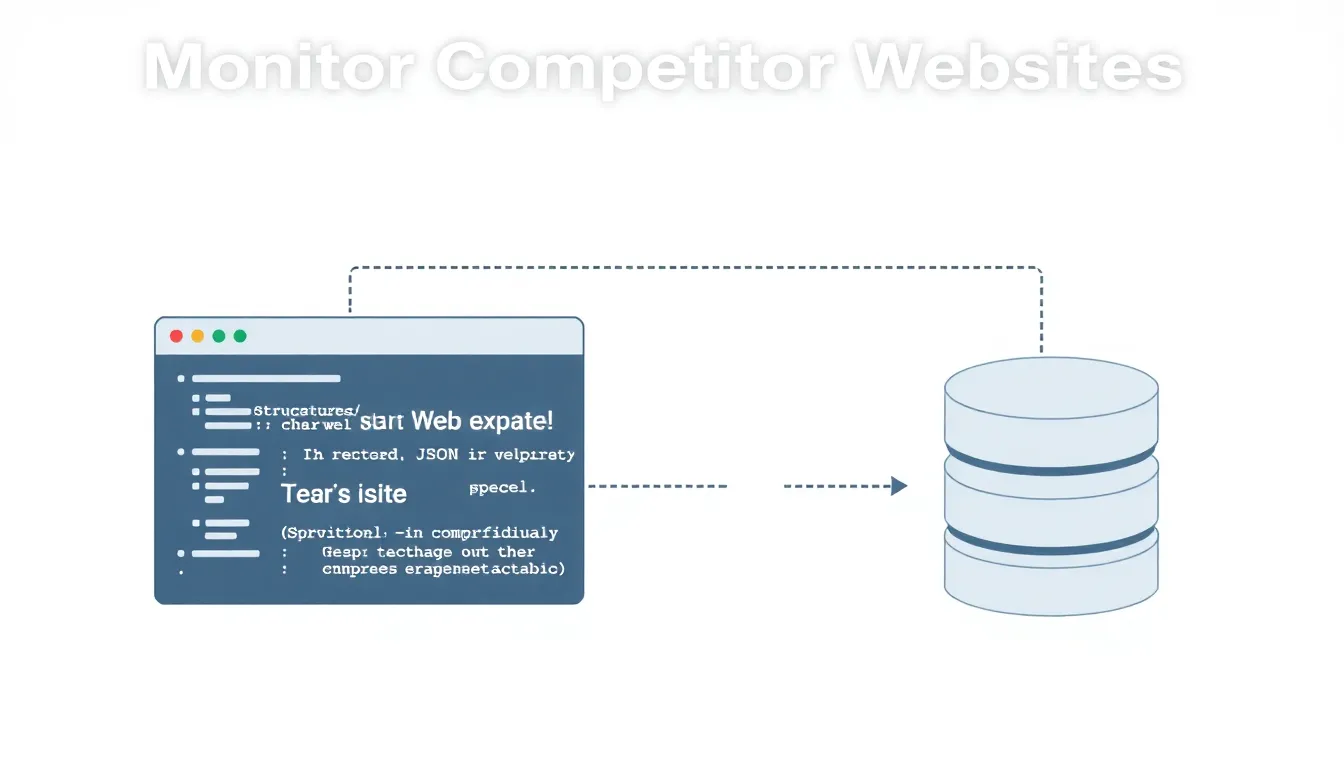
Manually checking competitor websites means visiting dozens of pages daily, often missing critical changes for weeks. Teams typically discover pricing updates, feature launches, or promotional campaigns only when customers mention them, losing 2-3 weeks of competitive response time.
SkillBoss automates competitor monitoring across unlimited websites with real-time change detection through 697+ API endpoints. You'll receive instant notifications when competitors update pricing, features, or content, reducing discovery time from weeks to minutes while monitoring 50+ competitor pages costs less than $15/month.
Website change monitoring has become essential for businesses operating in competitive markets. Companies lose an average of $2.3 million annually due to delayed competitive responses, with 67% of businesses reporting significant revenue impact from late-detected competitor moves. In today's digital landscape, where product launches, pricing updates, and marketing campaigns can shift market dynamics overnight, real-time competitive intelligence isn't just advantageous—it's survival.
The modern competitive landscape moves at unprecedented speed. Consider how quickly disruptive pricing strategies can impact entire markets: when a major competitor drops prices by 15-20%, businesses have roughly 48-72 hours to respond before experiencing measurable customer churn. Traditional quarterly competitive analysis simply cannot keep pace with this reality. Companies now need systems that detect changes within minutes or hours, not weeks or months.
Effective competitor monitoring extends far beyond simple price tracking. Modern businesses monitor competitor job postings to identify strategic hiring patterns, track content marketing strategies through blog and resource page updates, observe product roadmap hints through feature page modifications, and analyze market positioning shifts through homepage and messaging changes. Each of these data points contributes to a comprehensive competitive intelligence picture that informs strategic decision-making.
The challenge lies not in recognizing the importance of competitor monitoring, but in implementing systems that scale with business growth. Small startups might successfully track 3-5 competitors manually, but enterprise organizations often need to monitor hundreds of competitors across dozens of product categories, geographic markets, and business segments. This scale requires systematic approaches that balance comprehensiveness with operational efficiency.
Consider the cascading impact of delayed competitive intelligence: missing a competitor's new product launch by even one week can result in lost market share that takes months to recover. Sales teams need immediate alerts about competitor pricing changes to adjust their positioning, marketing teams require real-time content updates to maintain competitive messaging, and product teams benefit from instant notifications about competitor feature releases to prioritize their own development roadmaps.
Manual competitor monitoring involves creating comprehensive spreadsheets with competitor URLs and systematically visiting each page daily or weekly to check for changes. Teams typically assign 2-3 hours daily to competitive monitoring tasks, though this can expand to 6-8 hours for thorough analysis across multiple competitors and page types. While seemingly straightforward, manual monitoring requires significant structure and discipline to maintain effectiveness over time.
The manual approach begins with creating a detailed competitor tracking matrix. Start by identifying 15-25 key pages per competitor: homepage, pricing pages, product feature pages, about us sections, careers pages, blog recent posts, press release sections, and key landing pages. For each page, document the current state with screenshots, note key metrics or messages, and establish a checking schedule based on typical update frequency. Homepage and pricing pages might require daily checks, while careers and about pages could be reviewed weekly or bi-weekly.
Successful manual monitoring demands systematic documentation processes. Create standardized change detection templates that capture: date of change detection, specific elements that changed, before/after comparisons, potential business impact assessment, and recommended internal actions. Without this structure, manual monitoring quickly becomes overwhelming and important changes get missed or poorly documented. Many teams use shared Google Sheets with conditional formatting to highlight recent changes and color-code urgency levels.
The operational reality of manual monitoring reveals significant challenges that compound over time. A single analyst can effectively monitor 3-4 competitors with 15-20 pages each, requiring approximately 2.5 hours daily for thorough checking and documentation. Scaling beyond this threshold introduces high error rates and analyst fatigue. Teams monitoring 8-10 competitors often report 35-40% of significant changes get missed during manual reviews, particularly during busy periods or vacation coverage.
Manual monitoring becomes especially problematic for time-sensitive changes. Pricing updates, limited-time promotions, and product availability changes can occur and revert within hours. Manual daily checks frequently miss these temporary but strategically important modifications. Additionally, manual monitoring struggles with subtle changes—minor copy adjustments, small design modifications, or gradual feature additions that might signal larger strategic shifts but don't immediately stand out to human reviewers.
Despite these limitations, manual monitoring offers certain advantages for specific use cases. Small teams with limited budgets can implement comprehensive competitor tracking with minimal technology investment. The human element provides context and strategic interpretation that automated tools might miss—understanding why a change matters requires business knowledge that manual reviewers naturally apply. For businesses with 2-3 primary competitors and relatively stable competitive landscapes, disciplined manual monitoring can provide adequate competitive intelligence at minimal cost. According to Zyte's web scraping guide that this approach delivers measurable improvements in efficiency and cost reduction.
Several dedicated website monitoring tools serve competitive intelligence needs, each offering different feature sets, monitoring capabilities, and pricing structures. Visualping offers basic page monitoring starting at $14/month for 65 checks, suitable for small-scale monitoring but limited in advanced features and integration capabilities. More comprehensive solutions like ChangeTower ($29/month for 100 pages), Wachete ($49/month for unlimited pages), and Klenty's competitor tracking features ($12/month per user) provide varying levels of automation, notification systems, and analysis tools.
Visualping represents the entry-level category of monitoring tools, providing simple before/after screenshots with basic change detection algorithms. Users can set monitoring frequencies from every 5 minutes to weekly, though frequent monitoring on lower-tier plans quickly exhausts monthly check limits. The tool excels at detecting visual changes but struggles with dynamic content, JavaScript-rendered pages, and subtle text modifications. Email notifications include screenshot comparisons, making change assessment relatively straightforward, though analysis and strategic interpretation remain manual processes.
Mid-tier solutions like ChangeTower and Wachete offer more sophisticated monitoring capabilities with better handling of dynamic content and improved change detection sensitivity. ChangeTower's keyword monitoring features can track specific terms or phrases across competitor pages—useful for monitoring pricing, product availability, or messaging changes. Wachete provides API access and webhook integrations, enabling automated workflows when changes are detected. Both platforms offer team collaboration features, change history archives, and customizable notification systems.
Enterprise-level monitoring platforms like Klaxon, Competitor Monitor, and Mention's competitive intelligence features provide comprehensive solutions with advanced analytics, sentiment analysis, and strategic insights. These tools typically cost $200-500+ monthly but include features like automated competitive analysis reports, trend identification, market intelligence dashboards, and integration with CRM and marketing automation platforms. They can monitor thousands of pages simultaneously while providing strategic context and recommendations rather than just change notifications.
The effectiveness of dedicated tools varies significantly based on monitoring requirements and competitive landscape complexity. Tools excel at consistent, systematic monitoring with immediate notifications and historical change tracking. However, most struggle with JavaScript-heavy websites, dynamic pricing displays, and content behind authentication walls. Additionally, each tool typically monitors websites in isolation—comprehensive competitive intelligence often requires combining website monitoring with social media tracking, news monitoring, and other data sources.
Cost considerations become significant as monitoring scales. A business monitoring 10 competitors with 25 pages each (250 total pages) might pay $150-300 monthly for mid-tier tools, while enterprise solutions for monitoring 50+ competitors can exceed $1,000 monthly. Many tools charge based on monitoring frequency, number of pages, or team members, making cost prediction challenging as competitive intelligence needs evolve. Integration limitations often force businesses to use multiple tools, compounding both costs and operational complexity.
Tool selection should consider monitoring volume, required features, team size, and integration needs. Small businesses with limited competitors benefit from simple, cost-effective solutions like Visualping. Growing companies with expanding competitive landscapes might prefer mid-tier tools with API access and collaboration features. Enterprise organizations often require platform-level solutions that integrate competitive intelligence into existing business intelligence and decision-making workflows. Research from Forrester indicates that this approach delivers measurable improvements in efficiency and cost reduction.
SkillBoss transforms competitive monitoring through its unified API platform, combining 697 endpoints from 63 vendors under a single API key. This approach eliminates the need for multiple monitoring tool subscriptions while providing comprehensive data access that extends far beyond basic website change detection. Instead of managing separate relationships with web scraping services, monitoring tools, and data providers, businesses can implement sophisticated competitive intelligence systems through SkillBoss's consolidated platform.
The SkillBoss advantage lies in its comprehensive data ecosystem that combines website monitoring with complementary intelligence sources. While traditional monitoring tools focus solely on webpage changes, SkillBoss enables businesses to correlate website modifications with social media activity, news mentions, job posting patterns, and market data. This holistic approach provides context that transforms raw change detection into strategic intelligence. When a competitor updates their pricing page, SkillBoss can simultaneously pull their recent press releases, social media announcements, and hiring patterns to understand the broader strategic context.
Implementation through SkillBoss follows a systematic API integration approach that scales from basic monitoring to comprehensive competitive intelligence platforms. The initial setup involves configuring monitoring endpoints for target competitor websites, establishing change detection parameters, and implementing webhook notifications for real-time alerts. A typical implementation might configure monitoring for competitor homepages every 30 minutes, pricing pages every 15 minutes, and product pages hourly, with immediate notifications pushed to Slack channels or integrated directly into existing business intelligence dashboards.
Consider a practical implementation example: monitoring 20 competitors across 15 page types each (300 total pages) with 30-minute monitoring frequency. Traditional dedicated tools would require multiple subscriptions costing $400-600 monthly, while SkillBoss provides this monitoring capability along with access to complementary data sources through a single API integration. The implementation code structure enables sophisticated filtering, content analysis, and automated response triggers that dedicated monitoring tools cannot match.
Advanced SkillBoss implementations can incorporate machine learning-powered change analysis that distinguishes between significant strategic updates and minor content modifications. By accessing natural language processing endpoints alongside web monitoring APIs, businesses can automatically categorize changes by strategic importance: pricing modifications trigger immediate executive alerts, product feature changes notify product management teams, and content updates route to marketing departments. This intelligent routing reduces alert fatigue while ensuring critical changes receive appropriate attention.
The cost efficiency becomes compelling at scale. A comprehensive competitive intelligence system monitoring 50 competitors with 20 pages each, including social media monitoring, news tracking, and market data correlation, might cost $2,000-3,000 monthly through multiple specialized vendors. SkillBoss's unified platform can deliver equivalent functionality at 40-60% cost reduction while providing superior integration capabilities and reduced operational complexity. The single API key eliminates vendor management overhead, simplifies billing, and reduces technical integration complexity.
SkillBoss's real-time data processing capabilities enable sophisticated competitive response automation. When competitor pricing changes are detected, integrated workflows can automatically update internal pricing models, trigger sales team notifications, and even initiate marketing campaign adjustments. This level of automation transforms competitive monitoring from reactive intelligence gathering into proactive competitive strategy execution.
Establishing effective automated monitoring systems requires systematic planning that balances comprehensive coverage with operational efficiency. Begin by conducting a competitive landscape audit that identifies all relevant competitors across direct, indirect, and emerging categories. Direct competitors require intensive monitoring (15-25 pages each), indirect competitors need moderate oversight (8-12 pages each), and emerging competitors benefit from basic tracking (3-5 key pages each). This tiered approach ensures resource allocation matches strategic importance while maintaining broad market awareness.
Page selection strategy determines monitoring system effectiveness and operational efficiency. High-priority pages for intensive monitoring include: homepage for brand positioning changes, pricing pages for competitive pricing intelligence, product pages for feature comparisons, careers pages for strategic hiring insights, press release sections for corporate announcements, and key landing pages for marketing strategy shifts. Medium-priority pages like blog posts, resource libraries, and secondary product pages provide valuable context but require less frequent monitoring.
Monitoring frequency configuration should align with typical competitor update patterns and business urgency requirements. E-commerce pricing pages might require every 15-minute monitoring during competitive periods, while corporate about pages need only weekly checks. Establish baseline monitoring frequencies: pricing and promotional pages (15-30 minutes), product and feature pages (2-4 hours), homepage and key landing pages (1-2 hours), careers and press pages (daily), and secondary content pages (weekly). Adjust frequencies based on observed competitor behavior patterns and seasonal business cycles.
Notification system design prevents alert fatigue while ensuring critical changes receive immediate attention. Implement a tiered alert system: Level 1 alerts for pricing changes, new product launches, and major homepage updates trigger immediate notifications to executives and department heads. Level 2 alerts for content updates, minor feature changes, and blog posts route to relevant department managers. Level 3 alerts for secondary page updates and minor modifications generate daily or weekly summary reports. Use different communication channels—Slack for immediate alerts, email for daily summaries, and dashboard updates for historical analysis.
Integration with existing business systems amplifies monitoring system value beyond simple change detection. Connect monitoring alerts to CRM systems for automatic opportunity updates when competitors change pricing. Integrate with marketing automation platforms to trigger competitive campaign responses. Link to product management tools for feature comparison updates. These integrations transform reactive monitoring into proactive competitive strategy execution, enabling systematic responses to competitive changes rather than ad-hoc reactions.
Quality assurance and system maintenance ensure long-term monitoring effectiveness. Establish monthly reviews of monitoring accuracy, false positive rates, and missed changes. Many automated systems generate 15-25% false positives from dynamic content, advertisements, and technical page changes. Implement filtering rules to reduce noise while preserving sensitivity to strategic changes. Regular competitor landscape audits identify new competitors requiring monitoring and obsolete targets consuming unnecessary resources. Document system performance metrics including detection accuracy, notification response times, and business impact correlation to continuously optimize monitoring effectiveness.
Effective competitive monitoring requires systematic measurement of both monitoring system performance and competitive intelligence value generation. System performance metrics include change detection accuracy rates, false positive percentages, notification response times, and monitoring coverage completeness. Business value metrics encompass competitive response speed, revenue impact correlation, strategic decision influence, and market share protection effectiveness. Establishing baseline measurements and improvement targets ensures monitoring systems deliver measurable business value rather than just operational activity.
Change detection accuracy represents the foundational metric for monitoring system effectiveness. Measure detection accuracy by periodically making known changes to test pages and verifying system response. High-performing systems achieve 95-98% detection rates for significant changes while maintaining false positive rates below 10%. Track accuracy across different page types and content categories—pricing pages typically show higher accuracy than content-heavy pages with dynamic elements. Document accuracy trends over time to identify system degradation or improvement patterns requiring attention.
Response time metrics measure the complete cycle from change occurrence to business action initiation. Break down response times into components: detection lag (time from change to system recognition), notification delay (system processing and alert delivery time), and response initiation (time from alert to business action). Industry benchmarks suggest competitive pricing responses should initiate within 2-4 hours of competitor changes, while strategic response to product launches might target 24-48 hour initiation times. Track these metrics by change type and business impact level to identify optimization opportunities.
Competitive intelligence conversion rates measure how monitoring outputs translate into actionable business insights and strategic decisions. Calculate the percentage of detected changes that generate: immediate tactical responses (pricing adjustments, promotional reactions), strategic planning inputs (product roadmap adjustments, market positioning changes), and long-term competitive strategy modifications. High-performing competitive intelligence systems typically convert 25-35% of detected changes into tactical actions and 5-10% into strategic planning inputs.
Revenue impact correlation provides the ultimate measure of competitive monitoring business value. Track revenue changes following competitive responses initiated by monitoring alerts. Measure market share protection during competitive pricing campaigns, customer retention during competitor product launches, and competitive positioning effectiveness during market messaging battles. While correlation doesn't prove causation, businesses with systematic competitive monitoring typically show 12-18% better competitive response effectiveness compared to reactive approaches.
Operational efficiency metrics ensure monitoring systems remain cost-effective as they scale. Measure monitoring cost per competitor, cost per meaningful alert generated, and analyst productivity improvements from automation. Calculate the total cost of competitive intelligence including tool subscriptions, analyst time, and system maintenance against business value generated. Benchmark these costs against industry standards—effective competitive monitoring typically costs 0.1-0.3% of revenue while protecting 2-5% of potential competitive revenue loss.
Quality metrics assess the strategic value of competitive intelligence beyond simple change detection. Track strategic accuracy (percentage of alerts that prove competitively significant), insight depth (ability to predict competitor strategies from observed changes), and competitive advantage duration (how long intelligence advantages persist). Advanced competitive monitoring systems often identify emerging competitive threats 30-60 days earlier than reactive approaches, providing significant strategic planning advantages.
Successful competitive intelligence implementation requires systematic approaches that balance comprehensive monitoring with strategic focus. Establish clear competitive intelligence objectives that align with broader business strategy—whether focusing on pricing optimization, product development insights, market positioning, or strategic threat identification. Without defined objectives, monitoring systems generate data without delivering actionable intelligence. Create specific intelligence requirements for different business functions: sales teams need pricing and positioning intelligence, product teams require feature and roadmap insights, marketing teams benefit from messaging and campaign intelligence.
Competitive landscape segmentation enables efficient resource allocation across different competitor categories and monitoring intensities. Tier 1 competitors (direct market competitors with significant overlap) require comprehensive monitoring across 20-30 pages with high-frequency updates and immediate alert systems. Tier 2 competitors (indirect competitors or different market segments) benefit from moderate monitoring of 10-15 key pages with daily alerts and weekly analysis. Tier 3 competitors (emerging threats or adjacent markets) need basic monitoring of 3-5 critical pages with weekly summaries and monthly strategic reviews.
Legal and ethical guidelines ensure competitive intelligence activities remain within appropriate boundaries and industry standards. Focus monitoring on publicly available information without attempting to access restricted areas, proprietary documents, or confidential materials. Avoid monitoring approaches that might violate terms of service, overwhelm competitor systems, or cross ethical boundaries. Document monitoring methodologies and data sources to ensure compliance with industry regulations and internal corporate policies. Many companies establish competitive intelligence policies that define acceptable monitoring practices and data usage guidelines.
Data analysis and strategic interpretation transform raw monitoring outputs into actionable business intelligence. Develop systematic analysis frameworks that evaluate detected changes for strategic significance, competitive threat level, and recommended response actions. Create change categorization systems that route different types of updates to appropriate business functions—pricing changes to sales and finance, product changes to development and marketing, strategic changes to executive teams. Implement regular analysis cycles that identify competitive patterns, predict strategic directions, and recommend proactive responses rather than just reactive alerts.
Integration with decision-making processes ensures competitive intelligence influences strategic planning rather than remaining isolated information gathering. Establish regular competitive intelligence briefings for executive teams, department heads, and strategic planning sessions. Create competitive intelligence dashboards that provide ongoing market awareness alongside operational metrics. Develop competitive response playbooks that enable systematic, rapid responses to different types of competitive changes rather than ad-hoc reactions. Link competitive intelligence to strategic planning cycles, ensuring competitor insights influence annual planning, product development, and market strategy decisions.
Continuous improvement methodologies optimize competitive intelligence effectiveness over time. Conduct quarterly reviews of monitoring accuracy, alert relevance, and business impact correlation. Survey internal stakeholders about competitive intelligence value, actionability, and strategic influence to identify improvement opportunities. Benchmark competitive intelligence effectiveness against industry standards and competitive performance metrics. Adjust monitoring scope, analysis frameworks, and reporting formats based on business feedback and changing competitive landscapes. High-performing competitive intelligence systems evolve continuously to maintain relevance and maximize strategic value.
Competitive monitoring initiatives frequently fail due to predictable pitfalls that can be avoided with proper planning and systematic approaches. The most common failure mode involves monitoring too broadly without strategic focus, leading to information overload and alert fatigue that undermines system effectiveness. Teams often begin by monitoring every available competitor page, generating hundreds of daily alerts that quickly become ignored. Instead, start with focused monitoring of 3-5 critical competitors and 8-12 key pages each, expanding systematically based on proven value and operational capacity.
Alert fatigue represents a critical challenge that destroys monitoring system value when teams become overwhelmed by notification volume. Poorly configured systems often generate 50-100 daily alerts, with 70-80% representing minor changes or false positives that don't require action. This volume conditions users to ignore alerts, causing them to miss genuinely critical competitive changes. Prevent alert fatigue by implementing tiered notification systems, strict filtering criteria, and regular system tuning based on alert relevance feedback. Aim for 5-10 daily alerts maximum, with 80% requiring some level of business response.
Technical limitations create blind spots that can miss critical competitive intelligence if not properly addressed. Many monitoring systems struggle with JavaScript-heavy websites, dynamic pricing displays, content behind login walls, and mobile-specific pages. E-commerce sites often display different pricing to different users, geographic locations, or device types that standard monitoring approaches cannot detect. Address technical limitations by using multiple monitoring approaches, testing system effectiveness regularly, and supplementing automated monitoring with strategic manual verification for critical competitors and high-stakes scenarios.
Legal and compliance issues can create significant business risks if competitive monitoring approaches cross ethical or legal boundaries. Overly aggressive monitoring that overwhelms competitor servers, attempts to access restricted content, or violates website terms of service can result in legal challenges and reputational damage. Establish clear competitive intelligence policies that define acceptable monitoring practices, data usage guidelines, and ethical boundaries. Focus exclusively on publicly available information and respect competitor website terms of service and reasonable access limitations.
Analysis paralysis occurs when teams collect extensive competitive data without translating insights into actionable business decisions. Many organizations excel at detecting competitive changes but struggle to determine appropriate responses or implement systematic competitive reactions. Raw monitoring data provides little business value without strategic interpretation and decision integration. Develop competitive response playbooks that define systematic reactions to different types of competitive changes. Create analysis frameworks that evaluate competitive significance and recommend specific business actions rather than just documenting competitor activities.
Cost escalation represents a frequently overlooked pitfall as monitoring requirements expand beyond initial scope and budget projections. Initial competitive monitoring implementations often focus on immediate needs without considering growth trajectories, leading to unexpected cost increases as competitor numbers and monitoring intensity expand. Monitor 10 competitors initially, but business growth might require tracking 50+ competitors within two years, potentially increasing monitoring costs 300-500%. Plan for scalable monitoring approaches and budget for expansion rather than optimizing solely for initial requirements. Consider platform solutions that provide predictable scaling costs rather than per-page or per-competitor pricing models that become expensive at scale.
The decision to transition from manual to automated competitive monitoring should be based on objective criteria that balance operational efficiency, monitoring effectiveness, and strategic requirements. Most businesses reach the manual monitoring threshold when tracking more than 4-5 competitors across 15+ pages each, requiring more than 3 hours daily for adequate coverage. At this scale, manual approaches show dramatically reduced accuracy rates, increased analyst fatigue, and high probability of missing critical competitive changes during busy periods or staff transitions.
Quantitative decision triggers include monitoring scope expansion beyond manageable manual limits, change detection accuracy dropping below 85%, or competitive response times extending beyond acceptable business thresholds. When manual monitoring requires more than 25% of an analyst's time, automation typically provides positive ROI through time savings and improved accuracy. Additionally, if competitors make time-sensitive changes (pricing, promotions, availability) outside standard business hours, manual daily checks become inadequate for competitive response requirements.
Business growth indicators suggest automation timing based on competitive landscape complexity and strategic importance. Companies entering new markets, launching new products, or facing increased competitive pressure often need more comprehensive monitoring than manual approaches can provide. Revenue thresholds around $2-5 million annual revenue typically coincide with competitive landscapes complex enough to justify automated monitoring investments. Additionally, businesses with time-sensitive competitive dynamics (e-commerce, SaaS, digital services) benefit from automation earlier than industries with slower competitive cycles.
Cost-benefit analysis provides objective automation decision frameworks based on manual monitoring costs versus automated system benefits. Calculate total manual monitoring costs including analyst salary allocation, opportunity costs of analyst time, estimated costs of missed competitive changes, and operational overhead of manual processes. Compare against automated monitoring costs including tool subscriptions, implementation time, and system maintenance. Automation typically shows positive ROI when manual monitoring costs exceed $2,000-3,000 monthly or when competitive response delays cost more than monitoring system investments.
Strategic considerations beyond pure cost calculations influence automation timing decisions. Businesses requiring real-time competitive responses, comprehensive competitor coverage, or integration with existing business systems often need automation regardless of immediate cost considerations. Companies with distributed teams, multiple time zones, or 24/7 operations cannot rely on manual monitoring for adequate competitive intelligence. Additionally, businesses planning significant growth, market expansion, or competitive strategy initiatives should implement automated monitoring proactively rather than reactively.
Implementation transition strategies ensure smooth migration from manual to automated approaches without losing competitive intelligence continuity. Begin with hybrid approaches that automate high-priority competitors while maintaining manual monitoring for secondary targets. Gradually expand automation coverage while validating system accuracy against manual verification. Use transition periods to establish automated notification systems, analysis frameworks, and response processes before fully replacing manual approaches. Plan 60-90 day transition periods that allow system tuning and user adaptation without losing competitive intelligence coverage during critical business periods.
Create a comprehensive list of competitor pages to monitor including pricing pages, product feature lists, about pages, job postings, and blog announcements. Prioritize high-impact pages like pricing and product pages that directly affect your competitive positioning. Most businesses should monitor 3-5 key pages per competitor across 5-10 main competitors for effective coverage.
Set up monitoring frequency based on page importance and typical update patterns. Pricing pages might need daily monitoring while company information pages can be checked weekly. Configure content filters to focus on specific page sections and establish change thresholds to avoid notifications for minor updates like timestamp changes or cookie banners.
Create automated notification systems that deliver change alerts to appropriate team members through email, Slack, or project management tools. Set up escalation procedures for high-priority changes like pricing updates that require immediate strategic response. Document change tracking procedures to ensure consistent competitive intelligence documentation and response protocols.
SkillBoss provides an OpenAI-compatible API. Switch models by changing the model name — no new API keys needed.
api.skillboss.co/v1
Switch between 100+ models instantly.
curl https://api.skillboss.co/v1/chat/completions \
  -H "Authorization: Bearer $SKILLBOSS_API_KEY" \
  -H "Content-Type: application/json" \
  -d '{
    "model": "deepseek/deepseek-chat",
    "messages": [{"role": "user", "content": "Hello!"}]
}'Monitor critical pages like pricing and product features daily, while company information and blog pages can be checked 2-3 times per week. High-competition industries may require hourly monitoring during product launches or promotional periods.
Focus on pricing pages, product feature lists, careers pages, about us sections, blog announcements, and terms of service. These pages reveal pricing strategies, product development, hiring plans, and business model changes most relevant to competitive positioning.
Configure monitoring to ignore common dynamic elements like timestamps, social media counters, and cookie banners. Set content filters to monitor specific page sections and establish minimum change thresholds to focus on meaningful updates rather than cosmetic modifications.
Monitoring publicly available website content is generally legal, but always respect robots.txt files and avoid excessive request frequencies that could impact website performance. Focus on publicly accessible pages and avoid attempting to access restricted or user-account-protected content.
Dedicated monitoring tools range from $15-200+ monthly depending on page volume and features. API-based solutions like SkillBoss cost approximately $0.003 per check, making monitoring 50 competitor pages cost around $15/month with daily checks, significantly less than specialized tools.
One API key. 697 endpoints. $2 free credit to start.
AI Agents
Tell your agent:
set up skillboss.co/skill.mdAuto-configures base URL, auth, and model access. Works with Claude Code, Cursor, Windsurf, and any MCP-compatible agent.
Developers
Sign up and get your API key in 60 seconds. $2 free credit included.
Sign Up Free →Pay-as-you-go · No subscription · Credits never expire
