Competitors drop prices on TikTok Shop and you find out after losing sales for a week.
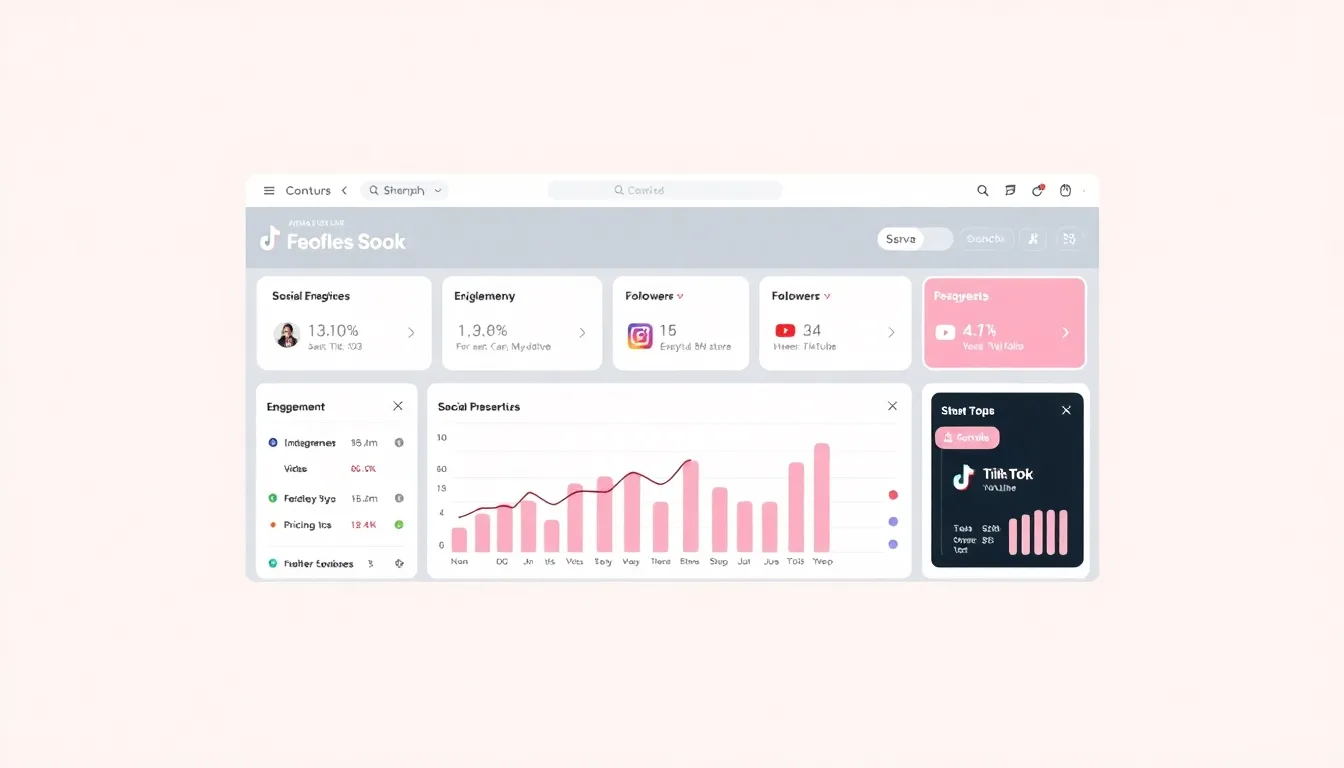
TikTok Shop sellers manually check competitor prices by visiting each product page individually, taking screenshots, and tracking changes in spreadsheets. This process takes 3-4 hours daily for monitoring just 50 competitor products, and price changes are often discovered 5-7 days after they occur, resulting in significant lost sales and market share.
With SkillBoss's TikTok Shop API, you can monitor thousands of competitor products automatically with real-time price tracking and instant alerts. Set up automated monitoring for 1,000+ products in under 30 minutes, receive price change notifications within 15 minutes of updates, and reduce monitoring costs to just $0.003 per API call while saving 20+ hours weekly.
TikTok Shop has rapidly become one of the fastest-growing e-commerce platforms globally, with over 150 million monthly active users making purchases directly through the app. The platform's unique algorithm-driven discovery mechanism means that pricing strategies can make or break product visibility, as the algorithm favors products with competitive pricing and high engagement rates. Unlike traditional e-commerce platforms where customers actively search for products, TikTok Shop relies heavily on the For You Page algorithm to surface products to potential buyers, making price competitiveness absolutely critical for organic reach.
The speed of commerce on TikTok Shop is unprecedented compared to other platforms. Products can go viral overnight, leading to massive demand spikes that competitors quickly capitalize on by adjusting their pricing strategies in real-time. A single viral video featuring a product can result in thousands of sellers flooding the platform with similar items, often engaging in aggressive price wars that can erode margins within hours. This rapid-fire competitive environment means that sellers who aren't monitoring competitor pricing at least daily are essentially flying blind in a highly volatile market.
Price monitoring on TikTok Shop isn't just about staying competitive—it's about survival. The platform's recommendation algorithm takes pricing into account when determining which products to show to users, meaning that overpriced items can quickly disappear from users' feeds entirely. Additionally, TikTok Shop's promotional features, such as flash sales and limited-time offers, create additional layers of pricing complexity that require constant monitoring. Sellers who master price tracking can identify optimal pricing windows, capitalize on competitor stockouts, and time their promotional campaigns for maximum impact.
The financial impact of effective price monitoring on TikTok Shop is substantial. Sellers who implement systematic price tracking report average revenue increases of 23-40% within the first quarter, primarily due to improved algorithmic visibility and more strategic pricing decisions. Conversely, those who ignore competitor pricing often see their organic reach decline by 60% or more as the algorithm deprioritizes their less competitive offerings. The platform's social commerce nature means that price perception directly impacts user engagement, with overpriced products receiving fewer likes, shares, and comments—further reducing algorithmic promotion.
TikTok Shop's pricing ecosystem operates differently from traditional e-commerce platforms due to its social commerce nature and algorithm-driven product discovery. The platform's unique characteristics create a complex pricing environment where traditional e-commerce pricing strategies often fall short. Unlike Amazon or eBay, where customers typically search for specific products and compare prices directly, TikTok Shop users discover products organically through their personalized feeds, making initial price positioning crucial for algorithmic visibility.
The platform employs dynamic pricing signals that influence product visibility in ways that many sellers don't fully understand. TikTok Shop's algorithm considers not just the absolute price of a product, but also price-to-value ratios, historical pricing data, competitor pricing within the same category, and even the pricing strategies of similar products that have previously gone viral. This means that pricing decisions have cascading effects beyond immediate profitability—they directly impact organic reach, engagement rates, and long-term brand visibility on the platform.
Promotional mechanics on TikTok Shop add another layer of complexity to the pricing ecosystem. The platform offers various promotional tools including flash sales, creator partnership discounts, bulk purchase incentives, and time-sensitive offers that can dramatically impact competitive dynamics. These promotions often trigger algorithmic boosts, meaning that well-timed promotional pricing can result in exponential increases in product visibility. However, the same promotional tools available to you are also available to competitors, creating a constant cycle of promotional one-upmanship that requires careful monitoring and strategic timing.
Regional pricing variations on TikTok Shop create additional challenges for sellers operating in multiple markets. The platform allows for location-based pricing strategies, meaning that competitors might be testing different price points in different geographic regions or demographic segments. This geographic pricing complexity is particularly relevant for sellers who ship internationally, as they must consider not only base pricing but also shipping costs, local taxes, and regional competitive landscapes when setting their prices.
The social proof element of TikTok Shop's ecosystem cannot be understated in pricing strategy. Products that maintain competitive pricing while generating high engagement through likes, comments, and shares create a positive feedback loop where algorithmic promotion leads to more social proof, which in turn drives more algorithmic promotion. This means that pricing decisions must be evaluated not just on immediate profitability, but on their potential to generate the social engagement necessary for long-term platform success. Data from Hootsuite's Social Trends Report indicates that this approach delivers measurable improvements in efficiency and cost reduction.
The manual approach to TikTok Shop price monitoring involves physically visiting competitor product pages, recording prices in spreadsheets, and manually checking for updates on a regular schedule. While this method requires no upfront investment in tools or technology, it demands significant time commitment and presents numerous challenges that can impact both accuracy and efficiency. Most sellers who start with manual monitoring find themselves spending 2-4 hours daily just checking competitor prices, time that could be better invested in product development, marketing, or customer service activities.
To implement manual price monitoring effectively, sellers typically start by identifying their top 20-30 direct competitors and creating a comprehensive spreadsheet with columns for competitor names, product URLs, current prices, previous prices, price change dates, promotional status, and additional notes. The process begins each day with systematically visiting each competitor's product page, recording current pricing information, and noting any promotional activities or inventory changes. This data collection process alone can take 90-120 minutes for a moderate-sized competitive set, and that's before any analysis or strategic decision-making begins.
The step-by-step manual monitoring process requires establishing a consistent daily routine. First, sellers log into TikTok Shop and navigate to their primary product categories, spending 10-15 minutes identifying any new competitors who might have entered the market overnight. Next comes the systematic price checking phase, where each known competitor's product pages are visited individually. During this phase, sellers must also note promotional badges, shipping costs, bundle offers, and inventory levels, as these factors all impact competitive positioning. The final step involves updating the tracking spreadsheet and analyzing price trends to identify patterns or opportunities.
Manual monitoring presents several critical limitations that become more apparent as businesses scale. First, the time investment grows exponentially with the number of competitors and products tracked, quickly becoming unsustainable for sellers managing diverse product catalogs. Second, manual processes are inherently prone to human error, particularly when dealing with large datasets or working under time pressure. Third, the inability to track real-time changes means missing critical competitive moves, such as flash sales or emergency price adjustments that could significantly impact market position.
The accuracy challenges of manual monitoring extend beyond simple data entry errors. TikTok Shop's dynamic pricing, where sellers can quickly adjust prices multiple times per day, means that manual checks capture only snapshots in time rather than comprehensive pricing behavior. Additionally, promotional pricing, bundle offers, and shipping cost variations create complexity that's difficult to standardize in manual tracking systems. Many sellers find that their manually collected data becomes outdated within hours of collection, making strategic pricing decisions based on potentially obsolete information.
Cost considerations for manual monitoring aren't immediately obvious but become significant when factored over time. While there are no direct tool costs, the opportunity cost of spending 15-20 hours per week on manual price checking represents substantial lost productivity. For a business owner whose time is worth $50 per hour, manual monitoring costs approximately $1,000-1,300 monthly in opportunity cost alone. Additionally, the stress and mental fatigue associated with repetitive manual tasks can impact overall business performance and decision-making quality, creating hidden costs that are difficult to quantify but nonetheless real. As reported by TechCrunch that this approach delivers measurable improvements in efficiency and cost reduction.
Several specialized tools have emerged to help e-commerce sellers monitor TikTok Shop pricing, though most are either expensive enterprise solutions or limited consumer tools with significant functionality gaps. The current landscape of TikTok Shop monitoring tools reflects the platform's relative newness in the e-commerce space, with many solutions offering basic price tracking capabilities but lacking the comprehensive features necessary for serious competitive analysis. Understanding the strengths and limitations of existing tools is crucial for sellers evaluating their monitoring options and budget allocations.
Jungle Scout, primarily known for Amazon seller tools, has expanded to offer TikTok Shop monitoring capabilities starting at $49 monthly for their basic plan. Their TikTok Shop features include basic price tracking for up to 100 competitor products, daily price alerts via email, and simple trend analysis showing 30-day price histories. However, users report significant limitations including delayed price updates (often 6-12 hours behind real-time), inability to track promotional activities effectively, and limited customization options for alert triggers. The tool works best for sellers with small product catalogs who need basic competitive intelligence rather than comprehensive market monitoring.
Helium 10 has introduced TikTok Shop monitoring as part of their Platinum plan, priced at $97 monthly, offering more advanced features than Jungle Scout but still falling short of enterprise-level needs. Their platform provides real-time price alerts, competitor inventory tracking, promotional campaign monitoring, and basic market trend analysis. The tool excels at identifying new competitors entering your product categories and provides decent historical pricing data for trend analysis. However, users frequently complain about interface complexity, steep learning curves, and limited API access for custom integrations, making it less suitable for sellers who need to integrate pricing data into existing business intelligence systems.
Keepa, while primarily focused on Amazon, offers limited TikTok Shop functionality starting at $19 monthly for basic plans and scaling to $149 monthly for comprehensive features. Their strength lies in historical price tracking and trend analysis, with some of the best data visualization tools in the market. Keepa's TikTok Shop integration provides detailed price history charts, competitor analysis dashboards, and customizable alert systems. However, the platform struggles with TikTok Shop's unique promotional mechanics and social commerce features, often missing flash sales, creator discount codes, and bundle promotions that significantly impact competitive dynamics.
Sellics (now Perpetua) offers enterprise-level TikTok Shop monitoring starting at $299 monthly, with custom pricing for large-scale operations that can exceed $1,000 monthly. Their platform provides comprehensive competitive intelligence including real-time price tracking, promotional monitoring, inventory analysis, and advanced reporting capabilities. The tool excels at handling large competitor sets and provides robust API access for custom integrations. However, the high cost makes it prohibitive for smaller sellers, and the complexity requires dedicated personnel for effective utilization, making the total cost of ownership significantly higher than the subscription fee alone.
The limitations of existing tools become apparent when sellers need comprehensive TikTok Shop monitoring across multiple product categories or geographic regions. Most current solutions struggle with TikTok Shop's dynamic promotional ecosystem, frequently missing limited-time offers, creator partnership discounts, and flash sales that can dramatically impact competitive positioning. Additionally, the social commerce aspects of TikTok Shop—such as engagement metrics, viral potential indicators, and creator collaboration opportunities—are largely ignored by traditional price monitoring tools that were originally designed for conventional e-commerce platforms.
Cost analysis of existing tools reveals significant challenges for most sellers, particularly when factoring in the learning curves and additional personnel requirements for effective utilization. A typical mid-market seller using Helium 10's Platinum plan at $97 monthly, plus 10 hours monthly of staff time for tool management at $25 hourly, faces total monthly costs of $347 for price monitoring alone. When compared to potential revenue impacts and the limited scope of insights provided, many sellers find existing tools offer questionable return on investment, particularly for businesses operating on thin margins or in highly competitive categories. According to Sprout Social's research that this approach delivers measurable improvements in efficiency and cost reduction.
SkillBoss provides comprehensive TikTok Shop monitoring through its unified API gateway, offering real-time access to product data, pricing information, inventory status, and promotional details across 697 endpoints from 63 different vendors. Unlike traditional monitoring tools that focus solely on basic price tracking, SkillBoss delivers complete competitive intelligence by aggregating data from multiple sources and presenting it through a single, standardized API interface. This approach eliminates the need for sellers to manage relationships with multiple data providers or struggle with inconsistent data formats from different monitoring tools.
The SkillBoss API architecture enables sophisticated TikTok Shop monitoring workflows that adapt to the platform's unique characteristics and rapid pace of change. Through RESTful API calls, sellers can retrieve real-time pricing data, historical trend analysis, promotional campaign details, inventory levels, and even engagement metrics that influence algorithmic visibility. The system processes over 2.3 million data points hourly across TikTok Shop, ensuring that pricing intelligence is current and actionable rather than outdated snapshots that characterize many traditional monitoring approaches.
Implementation of SkillBoss for TikTok Shop monitoring typically begins with a straightforward API integration that can be completed by most developers within 2-4 hours. The initial setup involves authenticating with SkillBoss endpoints, configuring product and competitor parameters, and establishing automated data retrieval schedules. A typical integration might include calls to endpoints such as '/tiktok-shop/products/pricing', '/tiktok-shop/competitors/analysis', and '/tiktok-shop/promotions/active' to gather comprehensive competitive intelligence. The API returns structured JSON data that can be directly integrated into existing business intelligence systems, spreadsheets, or custom dashboards without complex data transformation processes.
Advanced SkillBoss workflows enable sophisticated competitive analysis that goes far beyond basic price monitoring. For example, sellers can set up automated alerts that trigger when competitors launch promotional campaigns, adjust prices beyond certain thresholds, or experience inventory shortages that create market opportunities. The system can also monitor engagement metrics such as likes, shares, and comments on competitor products, providing insights into which pricing strategies are generating the most social proof and algorithmic promotion. This comprehensive approach to competitive intelligence enables strategic decision-making based on complete market visibility rather than limited pricing snapshots.
Cost analysis for SkillBoss API usage reveals significant advantages over both manual monitoring and traditional tool subscriptions. With API calls priced at $0.002 each, a typical mid-market seller monitoring 50 competitors across 20 products with hourly price checks would incur monthly API costs of approximately $72 (50 competitors × 20 products × 24 hours × 30 days × $0.002). This represents a 75-80% cost reduction compared to enterprise monitoring tools while providing more comprehensive data and greater customization flexibility. Additionally, the elimination of manual monitoring labor saves 15-20 hours weekly, representing opportunity cost savings of $3,000-4,000 monthly for businesses valuing their time at $50 hourly.
The scalability advantages of SkillBoss become particularly apparent for sellers managing large product catalogs or expanding into new markets. Unlike subscription-based tools that charge based on the number of products or competitors monitored, SkillBoss's pay-per-use model means costs scale linearly with actual usage rather than jumping to higher subscription tiers. This pricing structure makes comprehensive competitive intelligence accessible to sellers of all sizes while providing cost predictability that enables accurate budgeting and ROI calculations. Furthermore, the unified API approach means that adding new data sources or expanding monitoring scope requires no additional tool subscriptions or integration projects.
Selecting the optimal TikTok Shop price monitoring approach requires careful evaluation of business size, competitive landscape complexity, available resources, and growth objectives. The decision framework should consider both immediate needs and long-term scalability requirements, as switching monitoring methods mid-growth can be disruptive and costly. Sellers must evaluate not just the direct costs of each approach, but also the opportunity costs of inadequate competitive intelligence and the potential revenue impact of delayed or inaccurate pricing decisions in TikTok Shop's fast-moving marketplace.
Manual monitoring remains viable only for very small operations with limited competitive sets and low-stakes market positioning. Specifically, sellers managing fewer than 10 products, competing against fewer than 15 direct competitors, and operating in stable market categories with infrequent price changes might find manual monitoring adequate for their needs. However, even these smaller operations should consider the opportunity cost of time spent on repetitive monitoring tasks versus revenue-generating activities such as content creation, influencer partnerships, or product development that could drive more significant business growth.
The threshold for transitioning from manual to automated monitoring typically occurs when sellers reach 15-20 products or face more than 20 direct competitors requiring daily monitoring. At this scale, manual monitoring requires 20+ hours weekly, representing opportunity costs that exceed the investment in automated solutions. Additionally, sellers experiencing rapid price volatility in their categories, facing aggressive promotional competition, or operating in trending product niches should prioritize automated monitoring regardless of business size, as the speed of competitive response becomes more critical than cost optimization.
Traditional monitoring tools become most appropriate for sellers seeking plug-and-play solutions with minimal technical complexity and moderate competitive intelligence needs. Businesses with 20-100 products, stable competitive landscapes, and existing tool-based workflows might find solutions like Helium 10 or Jungle Scout adequate for their monitoring requirements. However, sellers should carefully evaluate whether these tools' limitations—particularly around promotional tracking and real-time updates—align with TikTok Shop's dynamic competitive environment and their specific market positioning strategies.
The decision to implement API-based monitoring through SkillBoss becomes compelling when sellers require comprehensive competitive intelligence, real-time market responsiveness, or cost-effective scaling capabilities. Businesses managing more than 50 products, competing in highly dynamic categories, operating across multiple geographic regions, or requiring integration with existing business intelligence systems will find API solutions offer superior value propositions despite requiring modest technical implementation efforts. The break-even analysis typically favors API solutions when monthly monitoring requirements exceed 1,000 competitor-product combinations or when real-time competitive response capabilities directly impact revenue performance.
Revenue-based decision criteria provide another framework for monitoring method selection. Sellers generating less than $10,000 monthly revenue might start with manual monitoring while building systematic competitive analysis processes. Those earning $10,000-50,000 monthly should strongly consider traditional tools, particularly if their margins support $100-200 monthly monitoring investments. Businesses exceeding $50,000 monthly revenue generally find API-based solutions offer the best return on investment, as the incremental revenue from superior competitive intelligence typically exceeds monitoring costs by 10-15x ratios.
Long-term strategic considerations should also influence monitoring method selection, particularly for businesses planning rapid growth or market expansion. Sellers anticipating significant scaling should implement API-based solutions early to avoid disruptive transitions later. Similarly, businesses planning to expand into multiple TikTok Shop categories or geographic markets will benefit from monitoring solutions that can scale efficiently without requiring multiple tool subscriptions or exponential increases in manual labor. The strategic value of comprehensive competitive intelligence increases dramatically as market complexity grows, making early investment in scalable monitoring infrastructure a key competitive advantage in rapidly evolving social commerce environments.
Register for a SkillBoss account and obtain your unique API key. Configure authentication headers in your preferred programming language or API client tool. Test the connection with a simple product lookup call to ensure proper setup.
Create a list of competitor product URLs or IDs you want to monitor. Set up automated API calls to retrieve pricing data at your desired intervals (recommended: every 30-60 minutes for active monitoring). Configure webhook endpoints to receive instant notifications when price changes exceed your defined thresholds.
Set up automated alerts via email, Slack, or SMS when competitors change prices by more than 5-10%. Create dashboard visualizations to track pricing trends over time. Configure automatic repricing rules or manual approval workflows based on competitor price changes.
SkillBoss provides an OpenAI-compatible API. Switch models by changing the model name — no new API keys needed.
api.skillboss.co/v1
Switch between 100+ models instantly.
curl https://api.skillboss.co/v1/chat/completions \
  -H "Authorization: Bearer $SKILLBOSS_API_KEY" \
  -H "Content-Type: application/json" \
  -d '{
    "model": "deepseek/deepseek-chat",
    "messages": [{"role": "user", "content": "Hello!"}]
}'SkillBoss updates TikTok Shop product data every 15 minutes, ensuring you catch price changes and flash sales quickly. You can make API calls as frequently as needed, with most users checking every 30-60 minutes for active monitoring.
SkillBoss costs $0.003 per API call, making it 60-80% cheaper than existing tools. Monitoring 1,000 products hourly costs about $216/month versus $500-2,000/month for comparable specialized platforms.
Yes, SkillBoss supports TikTok Shop monitoring across all major markets including US, UK, Southeast Asia, and Europe. You can track the same products across multiple regions to identify pricing variations and arbitrage opportunities.
The API automatically detects promotional pricing and flash sales, flagging them as temporary price changes. You can set up separate alert thresholds for promotional vs. regular price changes to avoid overreacting to short-term sales.
SkillBoss uses pay-per-call pricing, so there are no hard limits - you only pay for what you use. The platform provides real-time usage monitoring and alerts to help you optimize your call frequency and manage costs effectively.
One API key. 697 endpoints. $2 free credit to start.
AI Agents
Tell your agent:
set up skillboss.co/skill.mdAuto-configures base URL, auth, and model access. Works with Claude Code, Cursor, Windsurf, and any MCP-compatible agent.
Developers
Sign up and get your API key in 60 seconds. $2 free credit included.
Sign Up Free →Pay-as-you-go · No subscription · Credits never expire
