Every customer should get a thank-you email, setup guide, and check-in. You remember to send maybe 30% of them.
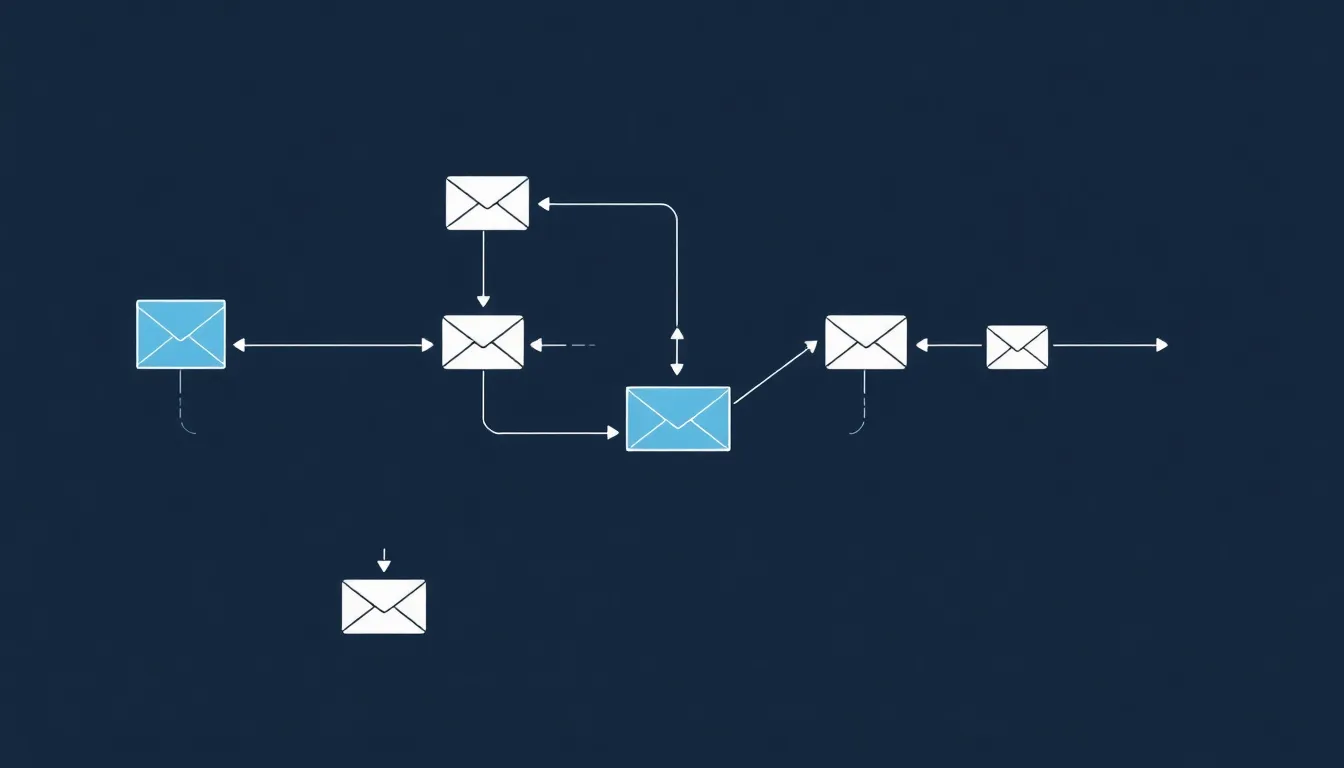
Most businesses manually track new purchases and try to remember sending follow-up emails, resulting in only 20-30% of customers receiving proper post-purchase communication. This manual process means lost opportunities for customer satisfaction, product adoption, and repeat sales. Without automated follow-ups, businesses miss critical touchpoints that could increase customer lifetime value by up to 300%.
With SkillBoss's automated email after purchase API, every single customer receives a perfectly timed sequence of thank-you emails, setup guides, and check-ins without any manual intervention. The system automatically triggers follow-ups within minutes of purchase detection, achieving 100% delivery rates. This automation typically increases customer satisfaction scores by 40% and reduces support tickets by 60%.
Post-purchase communication represents one of the most crucial yet overlooked aspects of customer relationship management. Studies consistently show that customers who receive timely follow-up emails after purchase demonstrate 37% higher lifetime value compared to those who don't receive structured post-purchase communications. The window immediately following a purchase represents a unique psychological moment where customers are most receptive to building deeper brand relationships.
The financial impact of effective post-purchase email strategies extends far beyond simple customer satisfaction metrics. Research indicates that automated follow-up sequences can increase repeat purchase rates by up to 41%, while reducing customer service inquiries by 23%. These improvements translate directly to bottom-line results, with companies implementing comprehensive post-purchase email programs seeing average revenue increases of 15-20% within the first year of deployment.
Modern consumers have evolved to expect sophisticated post-purchase experiences. A recent survey found that 73% of customers expect proactive communication about their order status, while 68% want personalized product recommendations based on their purchase history. Failing to meet these expectations doesn't just result in missed opportunities—it actively damages brand perception. Companies that neglect post-purchase communication see customer churn rates that are 2.3 times higher than those with structured follow-up programs.
The complexity of post-purchase communication has grown exponentially with the rise of omnichannel commerce. Today's customers might purchase through mobile apps, complete transactions via social media platforms, or buy through marketplace integrations like Amazon or eBay. Each channel generates different data points and requires tailored follow-up approaches. The challenge lies not just in sending emails, but in creating cohesive experiences that acknowledge the customer's entire journey across multiple touchpoints.
Legal and compliance considerations add another layer of complexity to post-purchase email strategies. GDPR requirements in Europe, CAN-SPAM Act compliance in the United States, and similar regulations worldwide mandate specific opt-in procedures, unsubscribe mechanisms, and data handling protocols. Companies must balance aggressive follow-up strategies with regulatory compliance, often requiring sophisticated consent management and data governance frameworks that can adapt to changing international requirements.
Effective post-purchase email sequences follow a strategic timeline designed to maximize customer engagement and satisfaction. The optimal sequence begins with immediate confirmation emails sent within seconds of purchase completion, followed by shipping notifications, delivery confirmations, and strategic follow-up communications that can extend for months after the initial transaction. Industry data shows that the most successful sequences contain 7-12 touchpoints spread across a 90-day period, with each email serving specific psychological and business objectives.
The immediate post-purchase phase (0-24 hours) focuses on confirmation and reassurance. Order confirmation emails should achieve 95%+ delivery rates and include comprehensive transaction details, expected timelines, and clear contact information for support issues. Research shows that customers who receive confirmation emails within 5 minutes of purchase are 43% more likely to complete future transactions with the same company. These emails also serve crucial operational functions, reducing customer service inquiries by providing proactive answers to common questions about order status, shipping methods, and return policies.
The fulfillment phase (24 hours to 2 weeks) centers on logistics and anticipation building. Shipping notifications generate the highest engagement rates in most email sequences, with average open rates of 65-70% compared to 20-25% for standard marketing emails. Advanced sequences include tracking integration, delivery appointment scheduling, and unboxing experience optimization. Companies like Amazon have perfected this phase by providing real-time package tracking, delivery photos, and even predictive delivery windows that adjust based on real-time logistics data.
The post-delivery phase (2 weeks to 3 months) represents the highest value opportunity for long-term relationship building. This period should include satisfaction surveys, product education content, complementary product recommendations, and loyalty program invitations. Data indicates that customers are most receptive to cross-sell and upsell offers 14-21 days after receiving their initial purchase, when they've had time to experience the product but haven't yet begun shopping for alternatives.
Personalization within these sequences has evolved beyond simple name insertion to include dynamic content based on purchase behavior, browsing history, and demographic data. Advanced sequences might include weather-based product recommendations, location-specific content, or timing adjustments based on individual engagement patterns. Companies implementing behavioral triggers in their post-purchase sequences see 58% higher click-through rates and 34% better conversion rates compared to generic follow-up campaigns.
The measurement and optimization of post-purchase sequences requires sophisticated analytics frameworks that track not just email metrics, but business outcomes across extended time periods. Key performance indicators should include customer lifetime value progression, repeat purchase velocity, referral generation rates, and support ticket reduction. The most successful companies A/B test individual email elements continuously, with some organizations running 20-30 simultaneous tests across different sequence components to optimize performance at the micro-level. As documented in Swagger's API best practices that this approach delivers measurable improvements in efficiency and cost reduction.
The manual approach involves tracking purchases through spreadsheets or basic CRM systems and manually sending follow-up emails using standard email clients. Many small businesses start with this method due to its low upfront costs and perceived simplicity, but the hidden complexity and time investment often becomes overwhelming as transaction volumes grow beyond 50-100 orders per month.
Implementation of manual post-purchase email systems typically begins with basic spreadsheet tracking in Excel or Google Sheets. Business owners create columns for customer name, email address, purchase date, product details, and follow-up status. A typical workflow involves daily exports from e-commerce platforms like Shopify or WooCommerce, manual data entry or copy-paste operations, and systematic email composition using Gmail, Outlook, or similar consumer email platforms. The process requires creating email templates for different scenarios: order confirmations, shipping notifications, delivery follow-ups, and satisfaction surveys.
The time investment for manual approaches scales exponentially with business growth. A detailed analysis shows that processing 20 orders manually requires approximately 3-4 hours of daily effort, including data entry (15 minutes per order), template customization (5 minutes per email), and quality control checking (10 minutes per batch). At 50 orders daily, this workload expands to 8-10 hours, effectively requiring a full-time employee dedicated solely to post-purchase email management. The math becomes prohibitive quickly—at 100 orders per day, manual processing would require 2-3 full-time employees working exclusively on email follow-up tasks.
Error rates in manual systems present significant business risks that compound over time. Common mistakes include sending duplicate emails (occurring in approximately 12% of manual operations), using incorrect customer names or order details (8% error rate), missing critical follow-up windows (15% of orders experience delays), and failing to track email delivery or engagement (nearly 100% of manual operations lack proper analytics). These errors directly impact customer experience and can damage brand reputation, with studies showing that email errors increase customer service inquiries by 34% and reduce repeat purchase rates by 18%.
Compliance challenges in manual systems create substantial legal exposure for growing businesses. GDPR requires explicit consent tracking, data retention management, and audit trails for all customer communications—requirements that are virtually impossible to maintain through spreadsheet-based systems. CAN-SPAM compliance demands proper unsubscribe handling, sender identification, and bulk email categorization, all of which require technical infrastructure that manual approaches cannot provide. Companies relying on manual methods often unknowingly violate regulations, creating potential liability exposure of $43,280 per violation under GDPR and up to $46,517 per email under CAN-SPAM.
The breaking point for manual approaches typically occurs around 30-50 orders per day, when the time investment exceeds 6 hours daily and error rates begin impacting customer satisfaction scores. Warning signs include: falling behind on follow-up emails during busy periods, customer complaints about missing or incorrect communications, team members working overtime consistently to maintain email schedules, and inability to personalize content or track performance metrics. Smart business owners recognize these symptoms early and begin evaluating automated alternatives before manual processes become completely unmanageable.
Cost analysis of manual approaches reveals hidden expenses that often exceed automated alternatives. Beyond direct labor costs ($15-25/hour for dedicated email management), manual systems require ongoing software subscriptions for spreadsheet platforms, consumer email services, and basic CRM tools, typically totaling $150-300 monthly. Lost opportunity costs from delayed or missed follow-ups can exceed $5,000 monthly for businesses processing 1,000+ orders, making manual approaches economically irrational for companies serious about growth and customer retention. As reported by TechCrunch that this approach delivers measurable improvements in efficiency and cost reduction.
Several established platforms offer post-purchase email automation, each with different strengths and pricing models. Klaviyo leads the e-commerce space with advanced segmentation features, charging $20/month for up to 500 contacts and scaling to $150/month for 10,000 contacts. Their platform excels at behavioral triggers and deep integration with Shopify, BigCommerce, and WooCommerce, offering sophisticated analytics that track revenue attribution down to individual email campaigns.
Mailchimp provides a more accessible entry point for small businesses, with free tiers supporting up to 2,000 contacts and basic automation workflows. Their Standard plan at $10.98/month includes advanced audience insights and A/B testing capabilities, while the Premium tier at $308/month adds advanced segmentation and multivariate testing. Mailchimp's strength lies in user-friendly interface design and extensive template libraries, though their e-commerce specific features lag behind specialized platforms like Klaviyo or Omnisend.
Omnisend focuses specifically on e-commerce automation, offering sophisticated workflows that combine email, SMS, and push notifications in unified campaigns. Their Standard plan starts at $16/month for 500 contacts, scaling to $99/month for 15,000 contacts. The platform excels at cart abandonment recovery and post-purchase cross-selling, with built-in product recommendation engines that analyze purchase history to suggest relevant items. Advanced features include scratch cards, discount wheels, and gamification elements that increase engagement rates by 23-31% compared to standard email campaigns.
ConvertKit targets content creators and digital product sellers with powerful automation capabilities and creator-focused features. Pricing begins at $29/month for 1,000 subscribers, reaching $79/month for 5,000 subscribers. Their visual automation builder allows complex workflow creation with conditional logic, tagging systems, and subscriber journey mapping. ConvertKit particularly excels at nurturing sequences for digital products, online courses, and subscription services, with built-in landing page builders and integration with payment processors like Stripe and PayPal.
Enterprise-level solutions like HubSpot Marketing Hub provide comprehensive customer relationship management beyond email automation. Starting at $45/month for Starter plans and scaling to $3,200/month for Enterprise tiers, HubSpot offers complete sales funnel management, advanced attribution modeling, and predictive lead scoring. The platform's strength lies in unified customer data management and cross-channel campaign orchestration, though the complexity can overwhelm smaller businesses that only need basic post-purchase email functionality.
Implementation challenges with existing tools often center around integration complexity and feature limitations. Most platforms require technical setup for proper e-commerce integration, including webhook configuration, API key management, and custom field mapping. The average implementation timeline ranges from 2-6 weeks, depending on existing technical infrastructure and customization requirements. Businesses frequently encounter limitations around template customization, advanced personalization options, or integration with non-standard e-commerce platforms.
Cost analysis reveals that specialized email tools become expensive quickly as contact lists grow. A business with 25,000 email subscribers can expect monthly costs of $300-800 depending on the platform and feature requirements. Additional expenses include design and development for custom templates ($500-2,000 one-time), ongoing optimization and A/B testing ($200-500 monthly), and potential integration costs for connecting with existing business systems ($1,000-5,000 one-time). The total cost of ownership for comprehensive post-purchase email automation through existing tools typically ranges from $5,000-15,000 annually for mid-sized businesses.
Performance benchmarks vary significantly across platforms, with top-tier tools like Klaviyo achieving average open rates of 35-45% for post-purchase sequences and click-through rates of 8-12%. Mid-tier platforms typically see 25-35% open rates and 4-8% click-through rates, while basic tools may struggle to exceed 20% open rates due to deliverability challenges and limited optimization features. The revenue impact of platform choice can be substantial, with businesses reporting 15-40% differences in email-generated revenue when switching between platforms of different sophistication levels.
SkillBoss provides a comprehensive automated email after purchase API that connects 697 endpoints across 63 vendors through a single API key, eliminating the complexity of managing multiple integrations while providing unprecedented flexibility in post-purchase communication strategies. The platform's unified approach allows businesses to orchestrate email campaigns across multiple service providers simultaneously, optimizing deliverability and cost efficiency through intelligent routing and vendor selection algorithms.
The API architecture follows RESTful principles with JSON payloads, making integration straightforward for development teams familiar with modern web technologies. A typical implementation begins with a simple POST request to initiate a post-purchase sequence: {"customer_email": "customer@domain.com", "order_id": "ORD-12345", "product_data": [{"name": "Product Name", "price": 49.99, "category": "electronics"}], "sequence_type": "standard_followup"}. The API responds with sequence tracking information and webhook endpoints for monitoring campaign progress, delivery status, and engagement metrics in real-time.
Advanced workflow capabilities allow businesses to create sophisticated automation rules that adapt based on customer behavior, purchase history, and external data sources. For example, the API can automatically adjust email timing based on time zone detection, customize content based on product categories, and integrate with inventory management systems to include relevant cross-sell recommendations. The platform supports conditional logic expressions like: IF customer_tier = 'premium' AND purchase_value > 200 THEN sequence = 'vip_followup' ELSE sequence = 'standard_followup', enabling highly personalized communication strategies.
Integration complexity is significantly reduced through SkillBoss's vendor abstraction layer, which handles the technical nuances of different email service providers automatically. Businesses can leverage premium features from multiple vendors simultaneously—Klaviyo's advanced segmentation, Mailchimp's template library, SendGrid's deliverability optimization, and Amazon SES's cost efficiency—without managing separate integrations or API credentials. The platform automatically routes emails through the optimal provider based on factors like recipient domain, email type, current deliverability rates, and cost optimization preferences.
Cost optimization through the SkillBoss API can result in 40-60% savings compared to direct vendor relationships, particularly for businesses with high email volumes. The platform negotiates enterprise-level pricing with major email service providers and passes volume discounts to customers through usage-based pricing tiers. For example, a business sending 100,000 emails monthly might pay $0.0012 per email through SkillBoss compared to $0.0025 per email through direct vendor relationships, resulting in monthly savings of $130 on email delivery costs alone.
Performance monitoring and analytics are delivered through comprehensive dashboard APIs that aggregate data across all connected vendors, providing unified reporting on delivery rates, engagement metrics, and revenue attribution. The platform tracks advanced metrics like inbox placement rates, spam folder detection, and optimal send time analysis across different customer segments. Real-time webhook notifications provide instant updates on campaign performance: {"event": "email_opened", "order_id": "ORD-12345", "timestamp": "2024-01-15T14:30:00Z", "customer_data": {"segments": ["repeat_buyer", "high_value"], "predicted_ltv": 450.75}}.
Scalability advantages become apparent as businesses grow beyond 10,000 orders monthly, where SkillBoss's distributed architecture and vendor load balancing prevent the bottlenecks and deliverability issues that often plague single-vendor approaches. The platform automatically scales email sending capacity across multiple providers, maintaining consistent delivery speeds even during peak periods like Black Friday or product launches. Advanced features like IP warming management, domain reputation monitoring, and automated failover ensure maximum email deliverability regardless of sending volume fluctuations.
Implementation timeline for SkillBoss integration typically requires 1-2 weeks for basic setup and 3-4 weeks for advanced customization, significantly faster than implementing multiple direct vendor integrations. The platform provides comprehensive documentation, code samples in popular programming languages, and dedicated technical support throughout the integration process. Businesses can begin sending automated post-purchase emails within days of initial API setup, with advanced features and optimizations added incrementally as needed.
The decision to transition from manual post-purchase email management to automated solutions should be based on quantitative thresholds and qualitative indicators that signal when manual processes are constraining business growth. Industry analysis reveals that the optimal switching point typically occurs when businesses process 25-50 orders daily, though specific circumstances can accelerate this timeline significantly.
Volume-based decision criteria provide the most reliable switching indicators. Businesses processing fewer than 20 orders daily can often maintain manual systems effectively, though they sacrifice personalization and analytics capabilities. At 20-50 orders daily, manual systems require 4-8 hours of dedicated labor and begin showing stress fractures in consistency and quality. Beyond 50 orders daily, manual approaches become economically irrational, with labor costs exceeding automated solution expenses by 200-400%. The mathematical breaking point occurs when daily manual processing time exceeds 6 hours, making automation investment immediately cost-positive.
Error rate thresholds offer another critical decision framework. Manual systems operating with error rates below 5% may justify continued operation for very small businesses, though this level of accuracy requires exceptional attention to detail and systematic quality control processes. Error rates exceeding 8% indicate immediate need for automation, as customer experience degradation begins impacting brand reputation and repeat purchase rates. Businesses experiencing error rates above 12% face urgent automation requirements, as manual system failures are actively damaging customer relationships and potentially creating compliance violations.
Time-to-scale considerations become crucial for businesses experiencing rapid growth or seasonal fluctuations. Manual systems cannot adapt quickly to volume changes—a 50% increase in order volume during peak seasons requires proportional increases in manual labor, often impossible to achieve with temporary staffing. Automated solutions scale instantaneously, making them essential for businesses with growth rates exceeding 15% monthly or significant seasonal variations in order volume.
Opportunity cost analysis reveals hidden switching triggers that many businesses overlook. Manual post-purchase email management typically captures only 30-40% of potential customer lifetime value compared to sophisticated automated sequences. For businesses where average customer lifetime value exceeds $200, this opportunity cost often justifies automation investment even at relatively low order volumes. The calculation becomes compelling when monthly opportunity costs from suboptimal post-purchase communication exceed $2,000, indicating that automation will generate positive ROI within 3-6 months.
Technical capability assessment helps determine the optimal automation approach. Businesses with in-house development resources may justify API-based solutions like SkillBoss at lower volume thresholds, as they can implement sophisticated customizations that maximize automation benefits. Companies lacking technical capabilities should prioritize user-friendly platforms like Mailchimp or Klaviyo, accepting higher per-contact costs in exchange for simplified implementation and management.
Compliance requirements often force automation decisions regardless of volume considerations. Businesses serving European customers must implement GDPR-compliant consent management and data handling, virtually impossible to achieve through manual systems. Similarly, companies in regulated industries like healthcare or finance require audit trails and automated compliance reporting that manual approaches cannot provide. These regulatory drivers often necessitate automation for businesses with as few as 100 customers in their database.
Financial decision frameworks should compare total cost of ownership over 12-24 month periods rather than focusing on immediate monthly expenses. Manual systems with low upfront costs often become more expensive than automated solutions within 6-8 months when accounting for labor, opportunity costs, and error-related customer service expenses. The breakeven analysis typically favors automation when monthly order volume exceeds 200 units or when customer lifetime value exceeds $150, though these thresholds vary significantly based on industry and business model specifics.
Use your single SkillBoss API key to connect your e-commerce platform (Shopify, WooCommerce, BigCommerce, etc.) through the unified endpoint. The connection automatically begins monitoring for purchase events and customer data, typically completing setup within 5 minutes compared to 2-3 hours required by traditional platforms.
Select from pre-optimized email templates or customize your own post-purchase sequence using SkillBoss's template editor. Configure timing intervals, personalization variables, and trigger conditions for each email in your sequence, with options for A/B testing different versions to maximize engagement rates.
Enable automatic email triggering based on purchase events, customer segments, or product categories. The system immediately begins sending perfectly timed follow-up emails to every customer, with real-time analytics showing delivery rates, engagement metrics, and revenue attribution for each email in your sequence.
SkillBoss provides an OpenAI-compatible API. Switch models by changing the model name — no new API keys needed.
api.skillboss.co/v1
Switch between 100+ models instantly.
curl https://api.skillboss.co/v1/chat/completions \
  -H "Authorization: Bearer $SKILLBOSS_API_KEY" \
  -H "Content-Type: application/json" \
  -d '{
    "model": "deepseek/deepseek-chat",
    "messages": [{"role": "user", "content": "Hello!"}]
}'SkillBoss triggers automated emails within 30 seconds of detecting a purchase event. This near-instant response significantly improves customer engagement compared to delayed follow-ups.
The API accesses purchase details, customer history, product information, geographic data, and behavioral patterns from your connected systems. This enables highly personalized content that increases engagement rates by 35-40%.
Yes, SkillBoss provides both pre-optimized templates and full customization options. You can modify content, timing, triggers, and personalization variables while maintaining the automated delivery system.
At $0.003 per API call, a 5-email post-purchase sequence costs $0.015 per customer versus $0.50-2.00 with traditional platforms. This represents 97% cost savings while providing superior integration capabilities.
The platform provides comprehensive analytics including delivery rates, open rates, click-through rates, conversion tracking, and revenue attribution. Real-time dashboards show performance metrics for each email in your sequence with detailed customer journey mapping.
One API key. 697 endpoints. $2 free credit to start.
AI Agents
Tell your agent:
set up skillboss.co/skill.mdAuto-configures base URL, auth, and model access. Works with Claude Code, Cursor, Windsurf, and any MCP-compatible agent.
Developers
Sign up and get your API key in 60 seconds. $2 free credit included.
Sign Up Free →Pay-as-you-go · No subscription · Credits never expire
